

My McCormick Journey
April 9, 2025
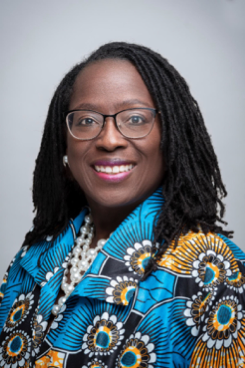
Kimberly Gaitor
Which McCormick tradition, practice, activity, or policy are you most proud of?
I'm most proud of McCormick's tradition of providing food and chapel services at most events. This practice reflects the seminary's understanding that community is built around shared tables. Breaking bread together creates space for meaningful connections beyond academic discussions and allows us to experience communion in its fullest sense. These meals become sacred moments where relationships deepen, diverse perspectives are shared, and the theological concepts we study become embodied in our fellowship. This tradition exemplifies McCormick's commitment to holistic formation that nourishes both mind and body.
What is your most difficult in-seminary memory?
My most challenging memory in seminary was identifying and breaking down embedded theologies. This process was profoundly difficult because it required confronting deeply held beliefs that had shaped my understanding of faith since childhood. Recognizing how certain theological perspectives were influenced by systems of oppression rather than liberation was both intellectually demanding and emotionally exhausting. However, this challenging work created space for more inclusive, justice-centered theological frameworks to develop. Though painful, this deconstruction process was essential for my growth as a minister committed to authentic engagement with scripture and tradition.
What is your most memorable McCormick event?
My most memorable McCormick event was creating the TikTok-style send-off video for graduates. This experience captured the spirit of our community—creative, joyful, and eager to embrace new forms of connection. Despite the serious nature of theological education, this moment reminded us of the importance of play and celebration within community. Working together across different programs and perspectives, we created something meaningful that honored graduates while also building bonds among continuing students. This collaborative project exemplified how McCormick empowers students to bring their whole selves—including their creativity and humor—to theological education.
What was the most enjoyable book you had to read for seminary work?
I've been transformed by many books during my seminary journey, each offering unique insights. "Jesus and the Disinherited" and "The Cross and the Lynching Tree" provide powerful frameworks for understanding Christianity's liberative potential. Womanist texts like "Womanist Midrash," "Sisters in the Wilderness," and "Just a Sister Away" opened new avenues for interpreting scripture through the experiences of marginalized women. Works exploring queer theology, including "Radical Love" and "Queering Theology," challenged me to reimagine inclusive communities. Books addressing violence and oppression—"Stand Your Ground," "Caste," and "She's Asking For It"—equipped me to confront systems of harm. This diverse reading journey has profoundly shaped my theological imagination and approach to ministry.
What was your favorite class and why?
I treasure several classes that shaped various aspects of my formation. Black Sacred Music reconnected me with worship as embodied praise, addressing a dimension often overlooked in academic theological education. The course allowed me to integrate intellectual understanding with spiritual expression, honoring the rich traditions of Black worship. Sexual and Domestic Violence provided essential tools for pastoral care and prophetic ministry, equipping me to support survivors while challenging rape culture. The Bible, Gender and Identity transformed my hermeneutical approach, helping me identify patriarchal influences within scripture and tradition. Collectively, these courses taught me to read texts with new eyes, approach ministry with greater sensitivity, and work toward dismantling oppressive systems.
In retrospect, do you think your expectations when you joined the seminary have been met?
My expectations were not just met but profoundly exceeded. I entered McCormick confident in my biblical knowledge and Christian education background, anticipating that I would simply refine what I already knew. Instead, I encountered transformative challenges that expanded my understanding of ministry, the church, and love in ways I never anticipated. McCormick pushed me beyond my comfortable theological perspectives, invited me into challenging conversations about justice and oppression, and equipped me with tools to engage with scripture critically and contextually. This journey has been more demanding—and more rewarding—than I could have imagined, reshaping not just what I know but also who I am as a minister.
What is your advice to the continuing students?
For continuing students struggling with writer's block (as I did after COVID): try dictating your papers using Speech to Text in Microsoft Word. This approach helped me overcome paralysis by allowing me to speak my ideas fluently when writing them felt impossible. While quick writing works for some, dictation captured more ideas comprehensively. Another practical tip: When you encounter compelling ideas in class or readings, document and cite them immediately rather than trying to reconstruct them later. This habit saves tremendous time when finalizing footnotes. Most importantly, find writing methods that align with your unique thinking process rather than forcing yourself into approaches that increase your anxiety.
Any parting thoughts or final reflections you would like to share?
You can achieve this. Engage with the community. Follow your own timing. Seek guidance from God. Act out of your love for the Lord. These simple truths supported me throughout seminary and will continue to guide my ministry. The journey of theological education can be demanding, but it is also deeply rewarding when approached as a communal endeavor rather than a solitary pursuit. Trust the process and remember that growth occurs in God's time, not according to academic calendars or external expectations. When motivation diminishes, return to your first love—serving God and God's people. This foundation will sustain you through challenges and celebrate with you during moments of breakthrough. The journey is worth pursuing.
Rev. Dr. Kimberly Gaitor is an ordained Deacon in the African Methodist Episcopal Church and a womanist theologian whose work centers on the lived experiences of Black women as sacred text. Through her ministry, scholarship, and advocacy, she continues the legacy of the women profiled in this article.