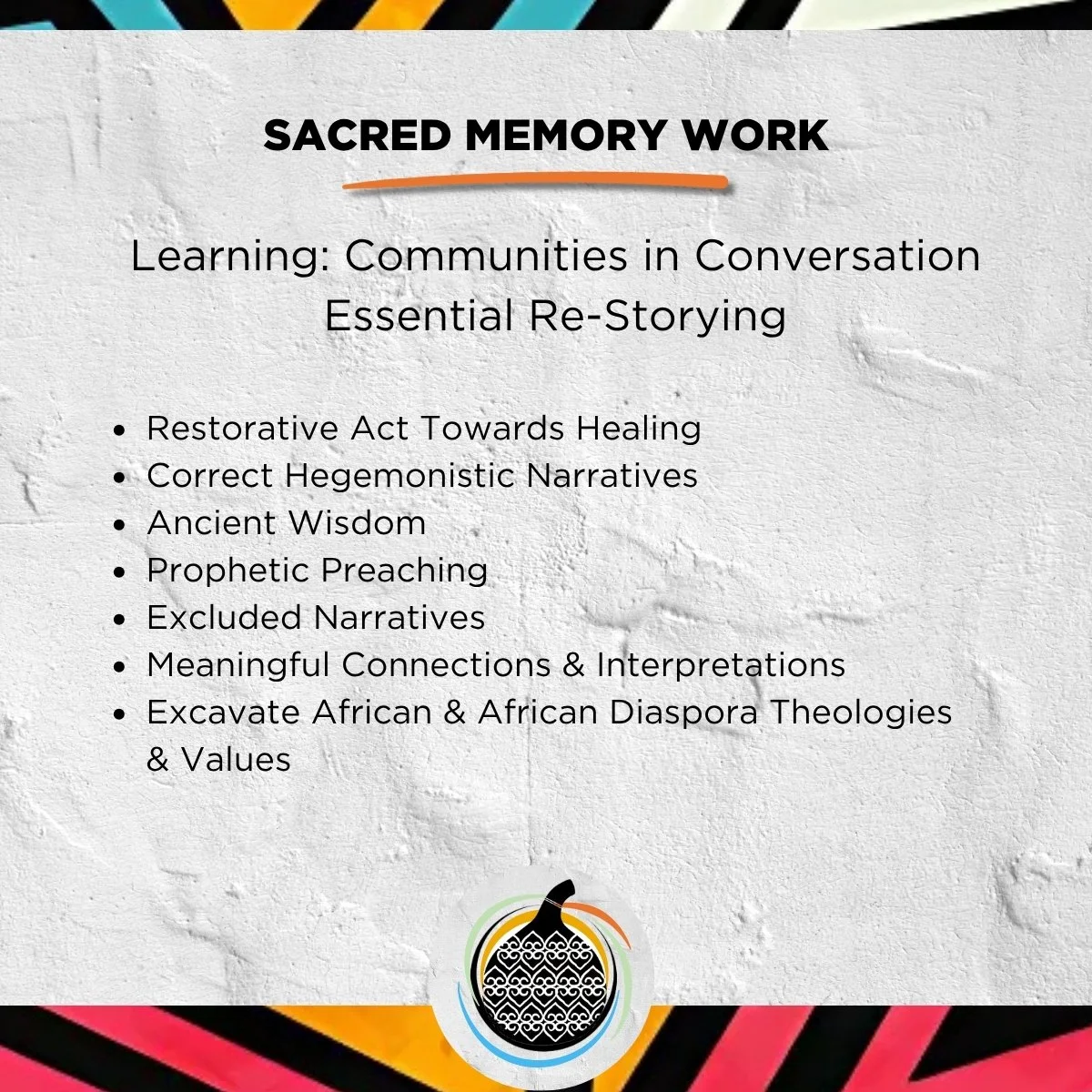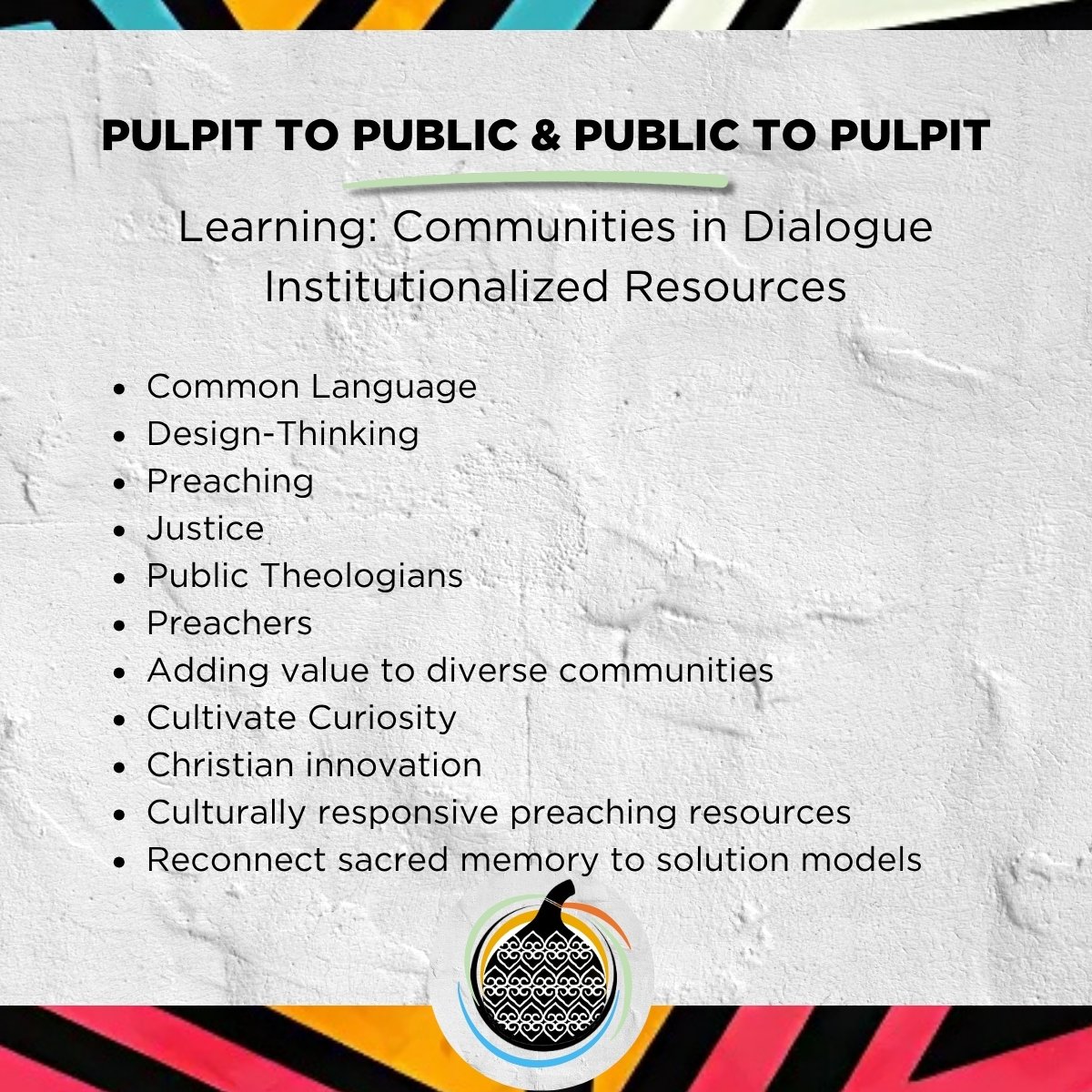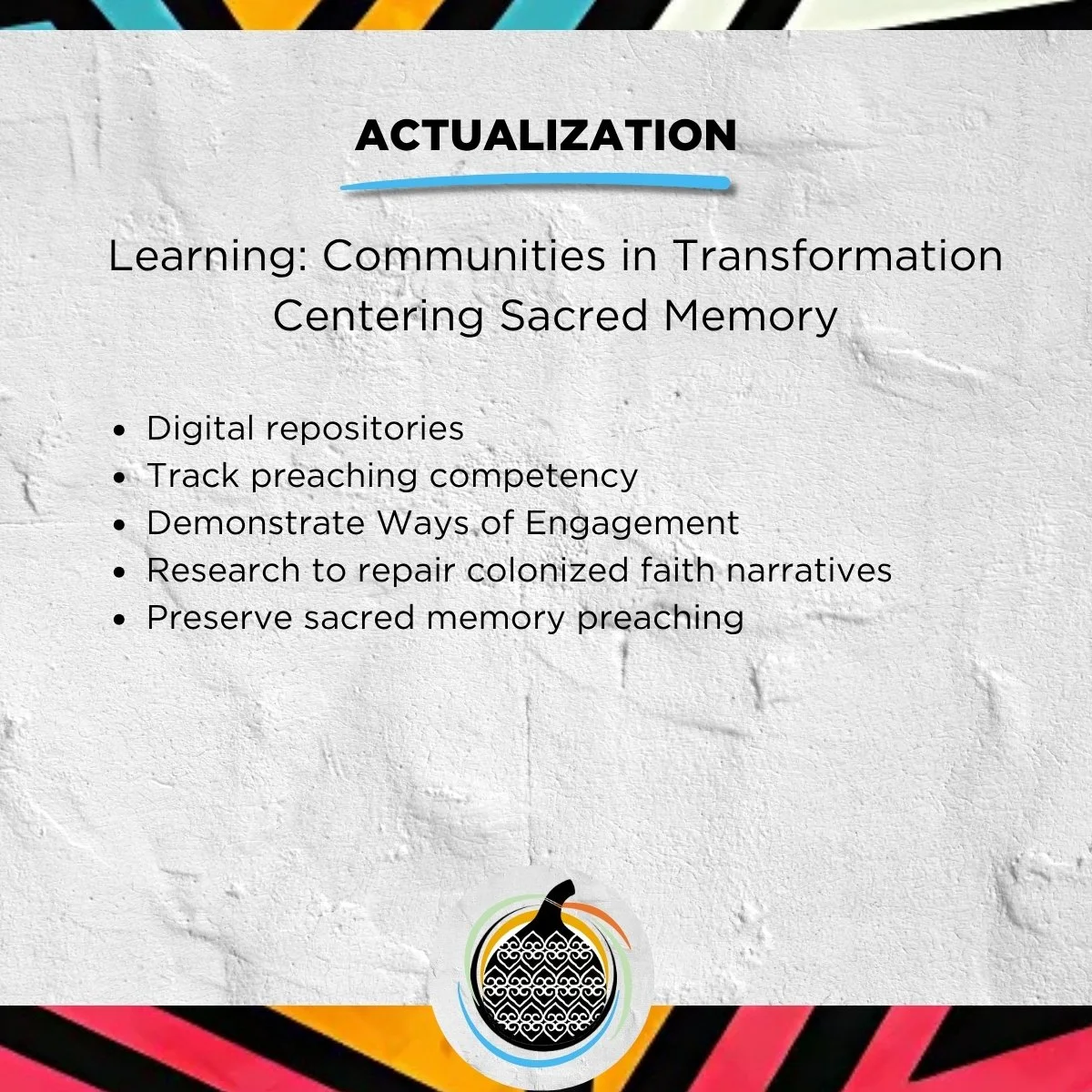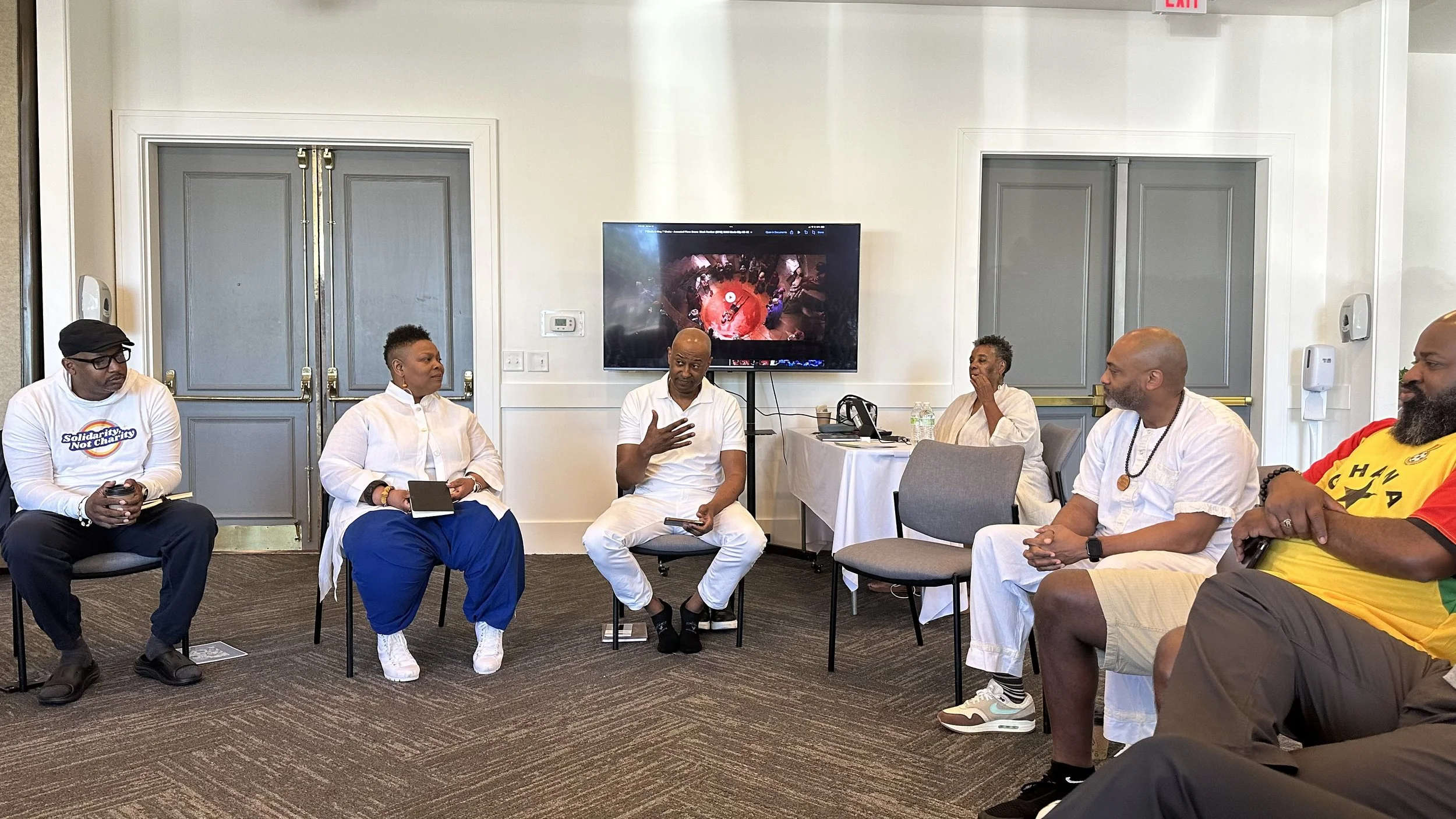


The Sacred Memory Project is dedicated to restoring the power of forgotten and distorted narratives. We develop transformative models for healing and repair, addressing the silencing and distortion of stories that diminish collective value. We broaden the understanding of "preaching" to encompass a wide range of voices, from established faith leaders to artists and digital storytellers, all working to create a more just and equitable future.
We invite you to participate in Sacred Memory work. Please choose one of the two links below — Join our Sacred Memory Community or Learn About Our Upcoming Events. Additionally, McCormick’s Master of Theological Studies - Distance program offers an educational focus on Sacred Memory.
The Sacred Memory Project is being funded through a grant from the Lilly Endowment’s Compelling Preaching Initiative.

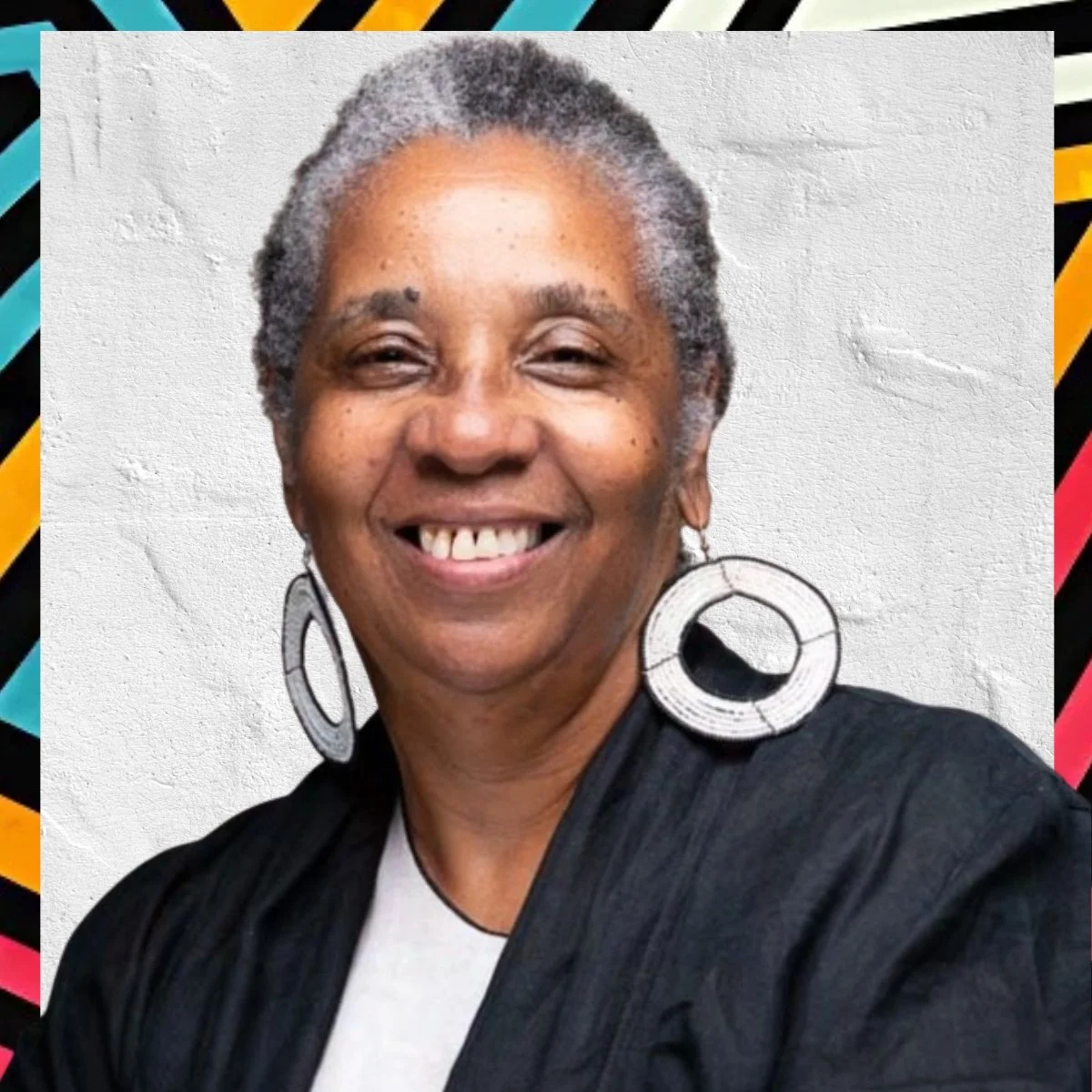
Itihari Touré EdD is Senior Director of Major Grants for Program Development at McCormick Theological Seminary and the founder and program director of the Sacred Memory Project.
An ordained ruling elder in the Presbyterian Church USA. Previously, she has worked at the Interdenominational Theological Center in Atlanta, where she taught Religious Education and served as the Director of Institutional Effectiveness. She previously launched initiatives like The Sankofa Center for Data Evaluation and Quality Enhancement and the Sankofa Public Fellows Project, collaborating with Historically Black Theological Institutions. With a career in education and ministry since 1976, she has focused on the Black church and Black women in ministry. Dr. Touré has coordinated the Black Women Ministerial Leadership program and contributed to grant writing for various initiatives. Dr. Touré has a B.A. in Education and Psychology, an M.A. in Human Development, and a Doctorate in Educational Leadership.
The Sacred Memory Cohort Prototypes
These Sacred Memory cohort projects function as living prototypes of practical public theology, designed and tested in real congregations, communities, and digital assemblies. Each thesis embodies sacred memory, Africana cosmologies, and human-centered design to address concrete pastoral challenges—baptism, prayer, vocation, gathering, Kwanzaa formation, film, and vocational discernment—as sites of communal healing and institutional transformation.
For mid-career professionals, these projects model what it looks like to manifest their Ikigai—the meeting place of passion, gifts, community need, and livelihood—through rigorous theological reflection and context-specific innovation. Graduates of this Sacred Memory MTS program emerge not only with a degree, but with tested prototypes, toolkits, and frameworks they can carry back into churches, nonprofits, schools, and social impact organizations as tangible expressions of public theology in action


The wisdom of our elders and the stories of our ancestors are shaping futures we imagine together. This November, McCormick’s Sacred Memory Project will bring that work to the Smithsonian’s National Museum of African American History & Culture as a selected participant in the 2026 Forward Religions Conference’s Next Tech Lab.
Presented by the museum’s Center for the Study of African American Religious Life, the conference explores the theme “Welcome Home.” Chosen from a large pool of applicants, Sacred Memory offers an experience rooted in Black ancestral knowledge, storytelling, and spiritual traditions.
Its interactive demonstration, Memory Is a Mending Technology, invites participants to remember, repair, gather, and imagine. Through digital stories, elder wisdom, reflection, and ritual, visitors will explore how sacred memory preserves cultural knowledge, nurtures healing, and strengthens belonging.
This recognition celebrates the living inheritance Black communities carry across generations—and the possibilities that emerge when we honor those who came before us.

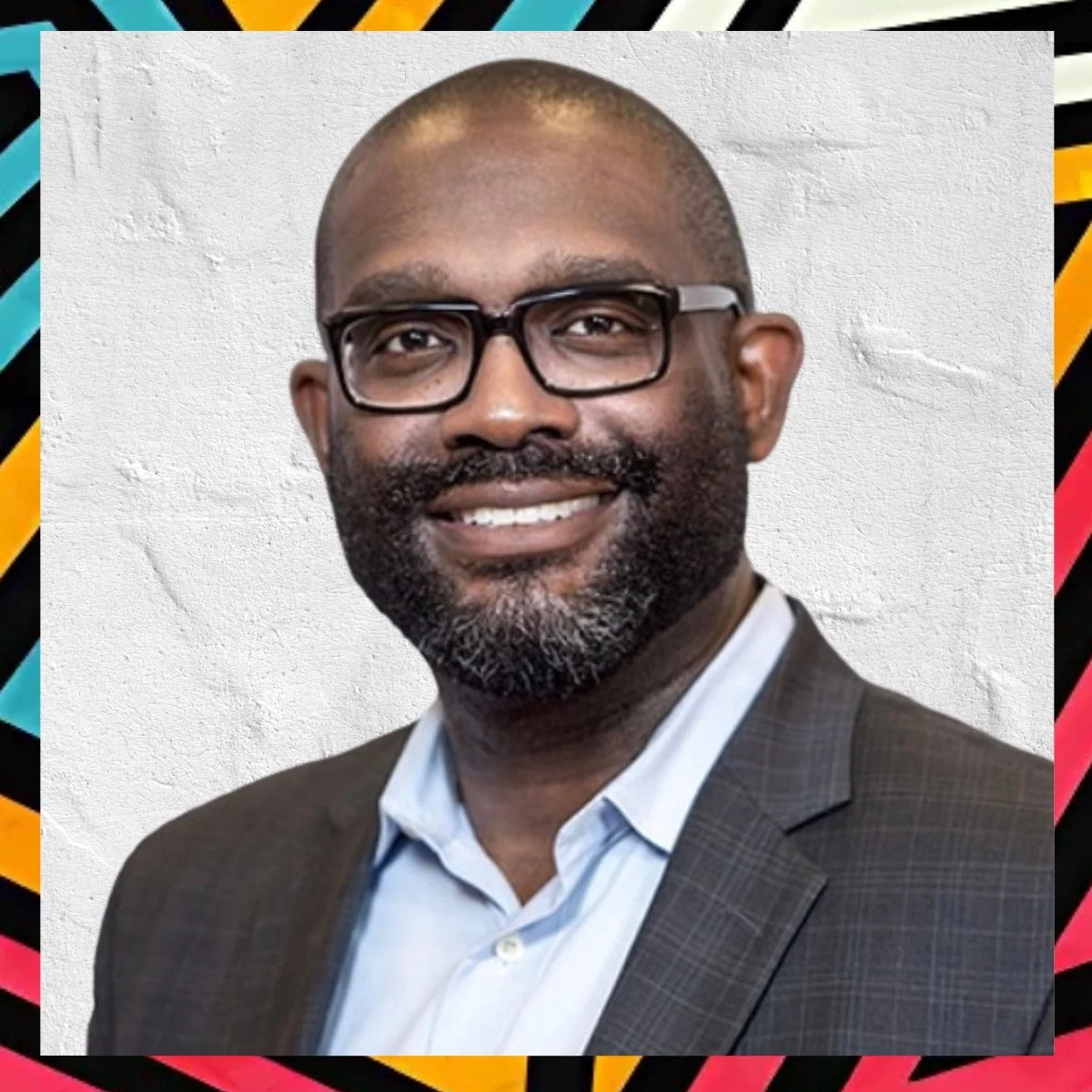
Rev. Dr. William H. Lamar IV has served since 2014 as pastor of Metropolitan African Methodist Episcopal Church, strengthening its growth and public witness through worship, liberation, and service. He helped launch the Lilly Endowment–funded Sankofa Christian Parenting Project and leads the church’s partnership with the Smart Surfaces Coalition to confront extreme heat and climate injustice in vulnerable communities. A Macon, Georgia native, he earned degrees from Florida Agricultural and Mechanical University and Duke University, and is pursuing a PhD at Christian Theological Seminary; he previously served as Managing Director of Leadership Education at Duke University Divinity School. A founding board chair of the Just Power Alliance, Lamar is a nationally recognized preacher, writer, and organizer, and author of Ancestors: The Names That Bless Us, Curse Us, and Hold Us (Broadleaf Books, 2026). He is married to Dr. Dana A. Williams, Dean of the Graduate School at Howard University.
Kindred Abundance Framework
An invitation to imagine abundance not as something accumulated or possessed, but as something created together through memory, reciprocity, trust, and care. Emerging from the Sacred Memory Project’s ongoing work, this framework offers practices for moving beyond scarcity and transactional exchange toward shared flourishing—while remaining open to the unexpected gifts and possibilities that emerge when our lives are bound together.
Explore more: Kindred Abundance: Learning Reciprocity at the Altar and Kindred Abundance: The Economy of the Unexpected.
What is Sacred Memory?
Sacred memory refers to the philosophies, theologies, social ethos, practices, and behaviors based upon ancient wisdom that inform social order, socialization, and social values. Sacred Memory is a form of ancestral technology to aid us in creating flourishing communal futures. It can also be a focal point of repair for the Christian church in general and at the core of healing for Black people of Christian faith.
Why Do We Need Sacred Memory?
Sacred Memory initiatives play a vital role in preserving heritage, promoting healing, educating future generations, and building stronger communities. They are essential for understanding who we are, where we come from, and how we can create a better future.
How Do We Engage in Sacred Memory?
Everyone has Sacred Memory, often found in family and community stories. Our task is to recover narratives that have been excluded or distorted, celebrating their inherent value as all experiences reflect the image of Our Creator. Begin by gathering these stories. Explore their relevance today, then collaborate with others to create activities that highlight these narratives and affirm their significance for the future.