

My McCormick Journey
April 16, 2025
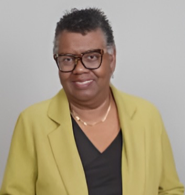
Barbara Akpan
I enrolled in the Master's program in the Art of Ministry at McCormick Theological Seminary in the fall of 2019 after being diagnosed with breast cancer many years earlier, following a 20-year retirement as a Critical Care Professional Nurse. My purpose at that time was to pursue theological and vocational discernment in response to a call from God to educate, advocate for, and comfort both saved and unsaved women of color who are oppressed and marginalized, and in need of quality, personalized breast health care services. I also felt called to provide pastoral care to individuals and families facing challenging times within the beloved community.
What McCormick tradition, practice, activity, or policy are you most proud of?
I chose McCormick because of its academic scholarship, support & commitment to Justice and diversity, excellence in Social theology, Pastoral Care, and Social justice ministry studies.
Which McCormick tradition, practice, activity, or policy are you most proud of?
The McCormick practice I am most proud of is the daily embodiment of the mission, vision, and values demonstrated by professors and support staff in educating and creating opportunities for both women and men to engage experientially in Christian ministry, preaching, and leadership. This is particularly true of the appointment and installation of Rev. Dr. Maisha Handy, an accomplished theologian, administrator, and educator, as the 12th president, the first African American president, and the second female leader of McCormick Theological Seminary on March 28, 2025. I appreciated the Trauma Healing Initiative’s 2025 Formation week activity, “Created to Rest,” which involved creating, breathing, focusing, listening, and unwinding videos. Amid the hustle and bustle of attending classes, engaging in experiential field study placements, and managing family life, a time of Sabbath rest and self-care was essential to help center ourselves in the presence of God, receiving love, discernment, and strength for the journey ahead.
What is your most difficult memory?
My most difficult seminary memory was staying up late at night to type my contextual ministry paper for the Ministry 404, fall, “Reflections in the Practice of Ministry” class. The electrical power grid in the community went out just as I was trying to “save as” in my contextual ministry Word document, forcing me to retype the entire document a second time.
What is your most memorable event?
In 2020, during my first year in seminary, my daughter became critically ill and was admitted to the intensive care unit (ICU). I called Rev. Liz Valle while sitting in the hospital parking lot to let her know I would not be in the Ministry 300, “Pilgrimage of Faith“ class because of this emergency. I was distraught, and Rev. Valle stayed on the phone, comforting and praying with me and for me for approximately two hours until I was more in control of my feelings. I will always cherish the sacred time we spent together in seeking God’s favor for my daughter’s healing.
What was the most enjoyable book you had to read for seminary work?
The most enjoyable book I read when I started seminary for the "Pilgrimage of Faithfulness" class was Patrick B. Reyes's Nobody Cries When We Die: God, Community, and Surviving to Adulthood. This narrative, written by the author, describes the sense of community shared by the neighbors, the violence, family heritage, the wisdom of his Latinx grandmother, and other mentors he encountered along the way who supported him in discerning his vocation. Like Reyes, I felt the need to be theologically prepared in seminary to answer the call to return to the African American community and help others to live. I was able to relate to this reading because we shared similar desires to provide pastoral care and social support with a vocation that can be used to help our communities thrive and cultivate healthier, more productive neighborhoods.
What was your favorite class and why?
I enjoyed sharing knowledge and expertise between the professor and other students in every class. I was able to gain new insights and ideas that I did not have prior to seminary. However, my favorite classes were Social Justice in the Local Church, Intro to Pastoral Care, Trauma, Restorative Justice, and the Bible. These courses prepared me scripturally, theologically, and practically with the knowledge and skills required of a pastoral care and restorative justice servant leader in congregations and communities.
The Intro to Pastoral Care class was the most helpful for my ministry. Rev. Dr. Stephanie Crompton engaged the class with topics such as trauma-informed and healing-centered care and practices, theological reflection, family dynamics frameworks, and systems theories, which focused on the pastoral care skills needed to support communities affected by challenges in their lives and help them find meaning in those experiences.
In retrospect, do you think your expectations when you joined the seminar have been met?
Yes. My expectations and educational experience have exceeded what I had imagined. I did not know what to expect when I joined McCormick Theological Seminary. I have ministry colleagues in my local church congregation who attended seminary here and assured me this was the most theological and socially justice-focused institution of higher learning, equipped to meet my vocational needs. I knew that due to my call to serve people from diverse racial, ethnic, and socioeconomic backgrounds and care for their physical, spiritual, psychological, and social needs—most importantly, their need to understand their faith—I would receive the most culturally diverse theological education in this community of Christian believers.
What is your advice to the continuing students?
Back up every paper you write on an external drive. Engage in community activities, community worship, and Formation week; these help build relationships within the McCormick community. Practice self-care rituals, especially when feeling stressed, that rejuvenate your mind, body, and spirit for the work ahead. Never give up! Romans 8: 28 reminds us that “And we know that in all things, works for the good of those who love him, who have been called according to his purpose." This means that even in difficult times and uncertainty, God is with you and is in charge of everything that happens in your seminary journey and your life. “Trust in the Lord with all your heart and lean out on your own understanding. In all your ways submit to him, and he will make your path straight" (NIV).