

The First Black Women in American Ministry
March 5, 2025
Celebrating International Women's Day Pioneering Paths
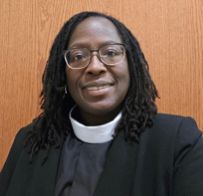
Rev. Dr. Kimberly Gaitor
In a world where paths were rarely cleared for them, several extraordinary Black women forged their own course in American religious history, becoming pioneers of ministry against significant odds. As an ordained Deacon in the African Methodist Episcopal Church, I stand on their shoulders every day. Their legacies not only transformed their denominations but also continue to inspire and challenge us today in our complex religious and political landscape. My journey in ministry would not be possible without their courage, persistence, and prophetic witness.
The First Trailblazers
Jarena Lee (1783-1864) never received formal ordination, but her story marks the beginning of Black women's public ministry in America. In 1819, Richard Allen, founder of the African Methodist Episcopal (AME) Church, granted Lee authorization to preach, making her the first African American woman formally recognized as a preacher. Although not officially ordained, Lee traveled thousands of miles on foot, journeying from station to station and staying in the welcoming homes of believers along the way. The communities she visited supported her ministry, providing lodging, meals, and gathering places as she preached the message of salvation to men and women, both Black and white, rich and poor alike. The unadulterated message of hope in Christ that she delivered resonated across social divides. Her 1836 autobiography, "The Life and Religious Experience of Jarena Lee," stands as the first published by an African American woman about her spiritual journey.
Mother Mary Elizabeth Lange (1784-1882) was a pioneering religious leader who co-founded the Oblate Sisters of Providence in 1829— the first successful Roman Catholic religious order for women of African descent in the United States. Born in Haiti and educated in Cuba, Mother Lange established St. Frances Academy in Baltimore, the first Catholic school for Black children in the United States. Her ministry focused on education, care for orphans, and serving marginalized communities at a time when enslaved Black people were legally forbidden from receiving education in many states.
Julia A. J. Foote (1823-1900) became the first woman ordained as a deacon in the AME Zion Church in 1894 at the age of 71, after decades of itinerant preaching. Her ordination as an elder followed in 1900, shortly before her death. A powerful holiness preacher, Foote faced tremendous opposition but persisted in her calling, publishing her autobiography A Brand Plucked from the Fire in 1879.
Amanda Berry Smith (1837-1915), who was born into slavery in Maryland, became an internationally renowned evangelist in the late 19th century. Although she was never formally ordained, Smith carried out evangelistic campaigns across the United States, Europe, and Africa. Her influence reached far beyond the pulpit—she established the Amanda Smith Orphanage and Industrial Home for Abandoned and Destitute Colored Children in Harvey, Illinois.
Breaking Denominational Barriers
The path to ministry for Black women varied significantly across denominations and took many forms. Many of these extraordinary women launched ministries during times of great hardship—through chattel slavery, in hush harbors, at tent meetings, during Reconstruction, throughout Jim Crow, and in the shadow of lynchings. Most had no formal training, no institutional support from their denominations, and often faced direct opposition from their male counterparts. Yet they persevered, bringing the gospel to all nations:
Nannie Helen Burroughs (1879-1961) was not ordained clergy but became one of the most influential religious leaders of her time. In 1909, she founded the National Training School for Women and Girls in Washington, D.C., with the motto "We specialize in the wholly impossible." A prominent Baptist leader, Burroughs served as president of the Woman's Convention of the National Baptist Convention and developed a theology that combined education, economic empowerment, and racial uplift.
Lillian Brooks Coffey (1881-1964) became the second General Supervisor of Women in the Church of God in Christ and was the first woman to conceive and implement the International Women's Department Convention in the denomination. Her organizational leadership created structures that empowered countless women in ministry, establishing a legacy of women's leadership that continues to this day. Though not ordained as traditional clergy, Coffey's administrative authority and vision demonstrated that ministry takes many forms beyond the pulpit.
Elder Lucy Smith (1875-1952) founded the All Nations Pentecostal Church in Chicago in 1906, making her one of the earliest Black female Pentecostal ministers with her own congregation.
Sister Thea Bowman (1937-1990), a Franciscan Sister of Perpetual Adoration, transformed Catholic liturgical traditions by incorporating African American spiritual and cultural elements. Though not ordained (as Catholic women cannot be priests), her ministry revolutionized how Black Catholics expressed their faith. She famously addressed the U.S. Conference of Catholic Bishops in 1989, urging them to embrace the gifts of Black Catholics.
Rev. Dr. Pauli Murray (1910-1985) broke multiple barriers as the first African American woman ordained as an Episcopal priest in 1977. Murray's extraordinary life included work as a civil rights lawyer, poet, and feminist activist before responding to the call to ministry in her 60s.
Rev. Dr. Katie Geneva Cannon (1950-2018) became the first African American woman ordained in the Presbyterian Church (USA) in 1974. She subsequently became a founding voice in womanist theology and ethics, publishing the groundbreaking work Black Womanist Ethics in 1988.
Bishop Vashti Murphy McKenzie made history in 2000 when she became the first woman elected as bishop in the African Methodist Episcopal Church's 213-year history. Her elevation to this position marked a watershed moment for women's leadership in Black denominations.
What Made Their Journeys Extraordinary
As a womanist theologian who considers the lived experience of Black women sacred, I am profoundly moved by how these prophetic ministries revealed God's presence. Their journeys are remarkable not only for breaking gender and racial barriers but also for several distinctive theological qualities that continue to inform my understanding of ministry:
Theology from the margins: They developed perspectives that spoke directly to the experiences of Black Americans, especially Black women, creating space for those voices within the Christian tradition. Their ministries embodied what I now express in my own work—that God is with us at the center of our struggle, for us in the manifestation of God's glory, and in the very fabric of our being. Dr. Renita Weems, one of the first Black women to earn a Ph.D. in Old Testament studies and a pioneering womanist biblical scholar, has continued this tradition by interpreting scripture through the lens of Black women's experiences, revealing how our stories carry divine revelation.
Holistic ministry: Many combined preaching with social activism, education, and care for the vulnerable—demonstrating that spiritual transformation demands social transformation. This approach is exemplified by Bishop Yvette Flunder, founder of City of Refuge United Church of Christ, whose ministry integrates worship with HIV/AIDS activism and advocacy for LGBTQ+ inclusion.
Persistence through opposition: Each faced triple marginalization—as women, as Black Americans, and as women claiming spiritual authority. Their determination in the face of both institutional barriers and societal prejudice shows extraordinary resilience. When I encounter obstacles in my own ministry, I draw strength from women like Dr. Prathia Hall, whose powerful praying inspired Martin Luther King Jr.'s "I Have a Dream" speech and who later became one of the first African American women ordained in the American Baptist tradition. She embodied this persistence throughout her career as a civil rights activist and theologian, demonstrating how our callings often require us to speak truth even when institutions resist our voices.
Innovative approaches: Lacking access to traditional pulpits, many developed alternative ministry models—traveling evangelism, home churches, and multimedia approaches (including publishing their life stories). Dr. Claudette Copeland's ministry has continued this tradition of innovation, developing a multi-platform ministry that extends beyond the pulpit through media, writing, and mentorship programs.
Lessons for Contemporary Ministry
The legacies of these pioneering women offer vital wisdom for today's ministerial leaders:
Ministry often begins before institutional recognition. Many women preached for decades before receiving formal ordination, demonstrating that an authentic calling precedes credentials. They remind us that the work of ministry continues whether or not institutions make space for it. The Right Rev. Kimberly Lucas, who in 2019 became the first woman and first African American to serve as Bishop of the Episcopal Diocese of Colorado, has spoken about how her sense of calling persisted through years when the path seemed uncertain.
Theological education takes many forms. While some later pioneers like Pauli Murray pursued formal seminary education, many early Black women ministers were self-taught theologians who developed profound biblical understanding through personal study and spiritual experience. Mother Mary Elizabeth Lange founded educational institutions despite having limited formal theological training, understanding that ministry includes creating access to education for others.
Community endorsement matters. These women in ministry thrived because communities recognized their gifts and calling, often before denominations did. They remind us that true spiritual authority emerges from relationships with the communities we serve. Jarena Lee's itinerant ministry was sustained by networks of believers who provided her with food, shelter, and gathering spaces—demonstrating how communal affirmation can sustain ministry even without institutional backing.
Intersectional awareness is essential. These preaching women understood the interconnectedness of racial justice, gender equality, and spiritual transformation long before "intersectionality" became a theoretical framework. Their ministries addressed the whole person in their full social context. My theological framework, which declares communal salvation and justice as fully as I declare personal relationship and baptism, builds directly on their legacy. Dr. Katie Geneva Cannon's womanist ethics particularly emphasized this intersectional approach, arguing that theology must account for the overlapping oppressions faced by Black women. From her, I learned that our liberation cannot be compartmentalized—it must be holistic or it is not truly liberation.
Their Message for Today’s Climate
In 2025, as our nation navigates political divisions that often involve religious language and racial tensions, these pioneering ministers offer a timely message: The same courage that empowered Black women to claim their right to minister when both church and society denied them can inspire us to speak truth in contexts where truth is contested. Their persistence reminds us that progress in justice work is rarely linear but requires steadfast commitment across generations. This lesson resonates particularly in our current moment, when racial justice movements face renewed resistance. Their holistic approach to ministry challenges the false dichotomy between “spiritual” work and “justice” work. At a time when some religious voices seek to separate personal faith from social responsibility, these women’s legacies demonstrate that authentic Christian witness addresses both individual transformation and systemic injustice. Bishop Yvette Flunder’s ministry model, integrating worship with advocacy for those most marginalized, continues this tradition of refusing to compartmentalize faith and justice. Perhaps most importantly, these pioneers show us that the margins often become sacred ground for revelation. When the church makes space for voices long silenced, it discovers new dimensions of God’s truth. In our polarized climate where religious institutions struggle to maintain relevance, the innovative ministry models developed by these women remind us that authentic spiritual leadership often emerges from unexpected places. Dr. Prathia Hall’s understanding that “faith is the substance of things hoped for, the evidence of things not seen” continues to inspire those working for change in seemingly impossible circumstances.
Conclusion
As we honor these first Black women in ministry, I am acutely aware that I am not merely celebrating historical milestones. I am giving thanks for the shoulders I am blessed to stand upon. These women—whether they preached in hush harbors or tent meetings, from pulpits or on national television, through sermons or writings or prayers—brought the gospel to the nations against overwhelming odds. Their journeys remind us that the path to transformation—both for church and society—is often charted by those whom conventional wisdom would least expect to lead. By remembering their stories, we reclaim an essential part of our spiritual heritage and find guidance for navigating our own complex ministerial landscape. When I face challenges in my own work as a woman in ministry, I draw strength from knowing that these women prevailed with far fewer resources and protections than I enjoy today. They did not simply join existing structures—they reimagined what ministry could be. In doing so, they created pathways not just for those who shared their specific identities but for all who seek to serve with authenticity and courage at the intersections of faith and justice. As a womanist theologian, I believe that our liberation is bound together. The pioneering work of these extraordinary women reminds us that when the most marginalized among us claim their divine calling, the entire church is transformed. Their legacies call us to continue their work of making visible the God who is with us in our struggles, for us in our triumphs, and in the very fabric of our being.