

Back Talk for Erykah Badu
APRIL 17, 2026
From the Desk of Rev. Dr. Maisha Handy
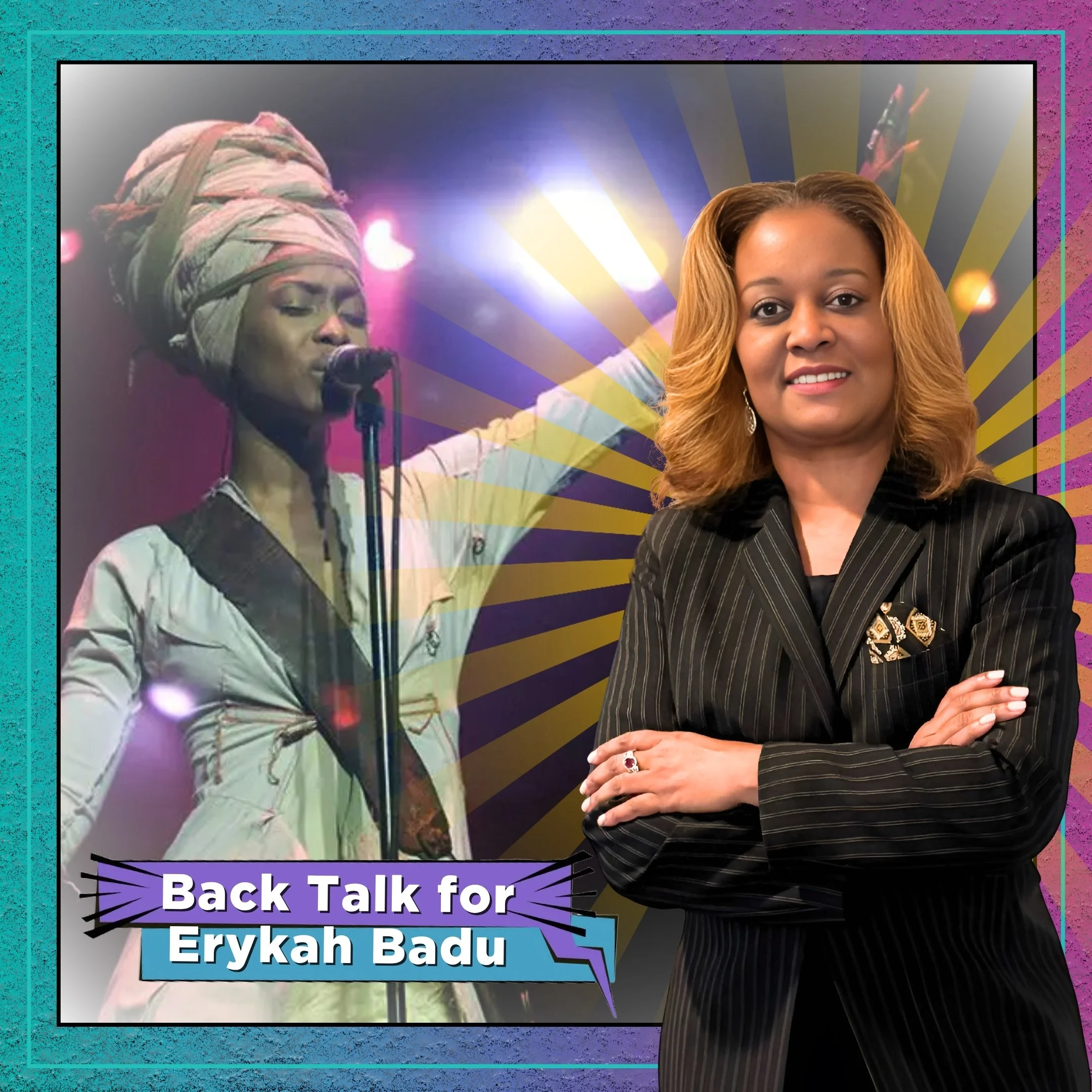
There are moments when cultural commentary crosses into sacred territory. And when it does, it calls for a response that is both pastoral and prophetic.
Recently, noted R&B singer Erykah Badu stirred conversation by suggesting that people—particularly Black folks—should reconsider tithing 10% of their income and instead invest that money to build personal wealth. On its face, the argument is compelling. Take $4,000 a year on a $40,000 salary, invest it wisely, and over time, it could grow into something substantial.
Sis… I hear you.
The math might be mathing. But the theology? The history? The communal implications?
That’s where I want to step in — not with dismissal, but with a little sisterly love.
And let me be clear, I’m a fan. From “On & On” to “Tyrone” to “Bag Lady.”
But let me lean in for a moment — with love, and with truth — for just a little bit of Back Talk on your thinking.
WHEN MONEY BECOMES MORE THAN MONEY
For some of us, tithing has never been merely a financial transaction. It is a spiritual discipline rooted in trust, gratitude, and covenant. It’s an invitation into a way of living where provision is not hoarded, but shared.
Scripture reminds us: “Each of you should give what you have decided in your heart to give… for God loves a cheerful giver” (2 Corinthians 9:7).
Tithing is not just obligation. It is formation.
THE BLACK CHURCH IS NOT A LINE ITEM
Let’s be even more direct: the Black church is not a subscription service you cancel when a better financial strategy comes along.
It is one of the oldest, most resilient institutions in Black life. It has been schoolhouse, sanctuary, organizing hub, mutual aid society, counseling center, and cultural archive — all at once.
The early church modeled this shared life: “All the believers were together and had everything in common… they sold property and possessions to give to anyone who had need” (Acts 2:44–45).
That is not charity. That is community.
And here’s something we don’t say enough: the church has also been a creative incubator, a birthplace.
Long before the spotlight, artists were shaped in pews and choirs. Voices were formed in sanctuaries before they ever reached stages.
Think of John Legend directing church choirs, or Kirk Franklin redefining gospel for a new generation. Aretha Franklin and Whitney Houston honed their voices first in the church — the very ecosystem being questioned has been a wellspring of cultural brilliance.
And that influence doesn’t stop there. Artists like Justin Timberlake and Carrie Underwood were also shaped by church music traditions, drawing from the same well of gospel sound, structure, and spirit that has long defined American music.
Even Erykah herself stands in this lineage.
Let’s be careful not to undermine the very soil that has produced so much fruit.
LET’S TALK ABOUT THE REAL MATH
And while we’re talking numbers, let’s tell the whole story.
The average American church has around 75 people. Seventy-five!
That’s not a mega-machine printing wealth for pastors. That’s a modest community doing its best to keep the lights on, supporting ministry, serving neighbors, and creating spaces where people can gather, heal, and grow.
Tithing, in most cases, isn’t making anyone rich. It’s keeping doors open, funding food pantries, supporting youth programs.
It’s sustaining spaces where people who have nowhere else to go can still find belonging.
So, when we frame tithing as “money better invested elsewhere,” we risk overlooking what that money is already doing — quietly, consistently, and collectively.
THE FALSE CHOICE OF FAITH VS. WEALTH
Now, here’s what I’ve really been wrestling with in Erykah’s words.
Economic empowerment is good. We should be building wealth. We should be investing. We should be practicing stewardship with wisdom and intention.
But framing this as a choice — either give to the church or build your future — is a false and dangerous dichotomy.
Faith and financial wisdom are not enemies. They are partners.
We do not need to abandon tithing to build wealth. We need a more expansive vision of stewardship.
One that says:
Give faithfully
Invest wisely
Build collectively
Sustain what has sustained you
Because the goal is not simply to have more. The goal is to ensure that what has carried us — faith, community, shared responsibility — continues to carry those coming behind us.
FINAL WORD
Erykah Badu is right about one thing: we must be intentional about how we use our resources. But intention without context can be dangerous. And in this case, the suggestion to walk away from tithing in pursuit of individual gain risks weakening one of the very institutions that has made Black flourishing possible.
So, no — let’s not cancel giving.
Let’s reclaim it.
Reframe it.
Re-root it in the truth that what we build together matters more than what we accumulate alone.
Because in the end, faith is not just about what we keep. It’s about what we release into the world, and who it becomes because of it.
Erykah herself once said: “I stay woke.”
And being truly awake means understanding that you can grow your money AND still invest in the very community that helped you become who you are.
Because legacy isn’t just what you build for yourself — it’s what you keep alive for everybody else.