

Disrupting Trauma Conference
JULY 1, 2026
An invitation to integrate spiritual depth, critical inquiry, and communal practices that foster healing and hope for transformative ministry
The realities shaping theological education today are increasingly complex.
Across classrooms, congregations, institutions, and communities, leaders are navigating collective grief, burnout, polarization, institutional strain, and growing questions around vocation, leadership, and communal care. These challenges are not simply operational. They are deeply formative, shaping how we teach, how we lead, how we care for one another, and how we prepare leaders for ministry and service in a rapidly changing world.
In this moment, trauma is no longer a peripheral conversation.
Its effects are visible in our bodies, our institutions, our communities, and our spiritual lives. Yet alongside these realities lies an urgent question: What might become possible if theological education intentionally engaged trauma not only as a challenge to address, but as a site for healing, resilience, and transformation?
THE CONFERENCE GATHERING
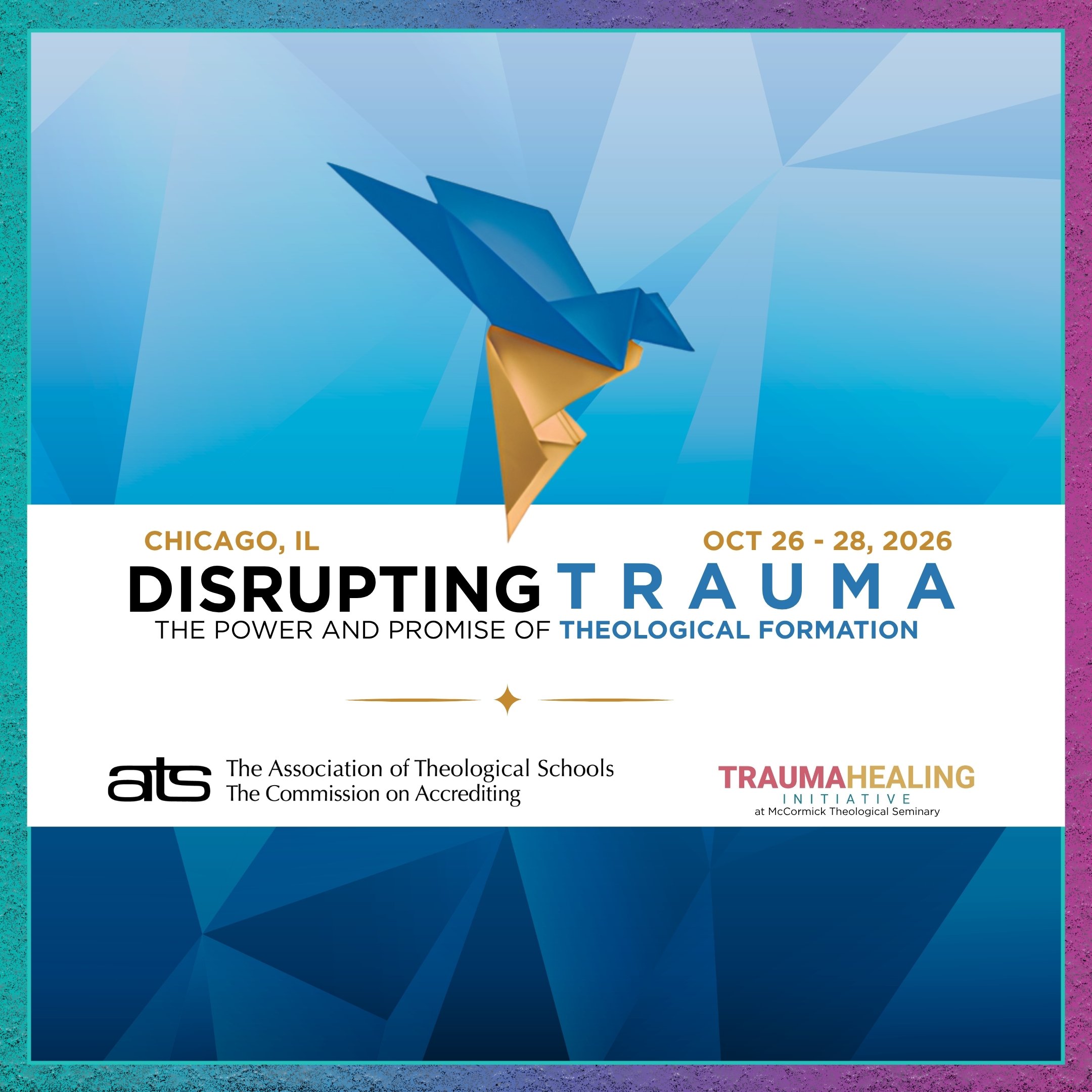
That question sits at the heart of Disrupting Trauma: The Power and Promise of Theological Formation, a national gathering convened by the Association of Theological Schools and the Trauma Healing Initiative at McCormick Theological Seminary.
Taking place October 26–28, 2026, in Chicago, the conference will bring together educators, institutional leaders, practitioners, students, scholars, and faith leaders for courageous conversation, communal reflection, and interdisciplinary learning centered on trauma-responsive formation, leadership, and care.
Through plenary sessions, workshops, contemplative practices, and community-building experiences, participants will explore how theological formation can cultivate not only resilience, but renewal—creating space for healing, post-traumatic growth, and new possibilities for communal flourishing.
VOICES OF LEADERSHIP AND HOPE
For Dr. Stephanie Crumpton, Director of McCormick’s Trauma Healing Initiative and co-convener of the conference, the gathering is rooted in both honest reckoning and radical hope.
“Trauma can narrow our imagination, convincing us that survival is the best we can hope for. But theological formation invites us to ask deeper questions—about healing, meaning, community, and what resurrection can look like after disruption. This conference is about creating space for leaders and institutions to move beyond endurance toward post-traumatic growth, renewed purpose, and collective flourishing.”
Dr. Elsie Miranda, Director of Diversities at the Association of Theological Schools and the other co-convener of the conference, emphasizes the importance of creating spaces where diverse voices and lived experiences shape the conversation around trauma and healing.
“Trauma impacts communities differently, often shaped by histories of marginalization, injustice, and exclusion. Theological education has a profound opportunity — and responsibility — to cultivate spaces where diverse experiences are honored, collective healing is possible, and leaders are equipped to foster justice-centered care. This gathering invites us to imagine formation that is deeply inclusive, courageous, and transformative.”
REIMAGINING FORMATION
McCormick’s leadership in trauma-informed formation through the Trauma Healing Initiative, combined with ATS’s commitment to advancing diversity and equity in theological education, makes this gathering especially timely. By bringing together scholarship, spiritual reflection, embodied practice, and communal wisdom, Disrupting Trauma seeks to help theological institutions imagine more compassionate, resilient, and transformative ways of forming leaders for the church and the world.
This conference is ultimately about more than responding to trauma. It is about expanding our imagination. It is about asking what healing can look like in community. What leadership requires in seasons of disruption. What becomes possible when institutions choose formation alongside information, care alongside rigor, and hope alongside honesty.
RESURRECTION AND RENEWAL
It is also about resurrection.
Not resurrection as easy optimism or denial of pain, but resurrection as the stubborn insistence that trauma does not have the final word — that beyond rupture, renewal remains possible.
We hope that many of you will join us in this important conversation. Learn more and register at disruptingtraumaconference.com.