

Formed for Such a Time as This
JANUARY 21, 2026
Rev. Dr. Leverette Bryant on Ministry in Chicago’s Near West Side
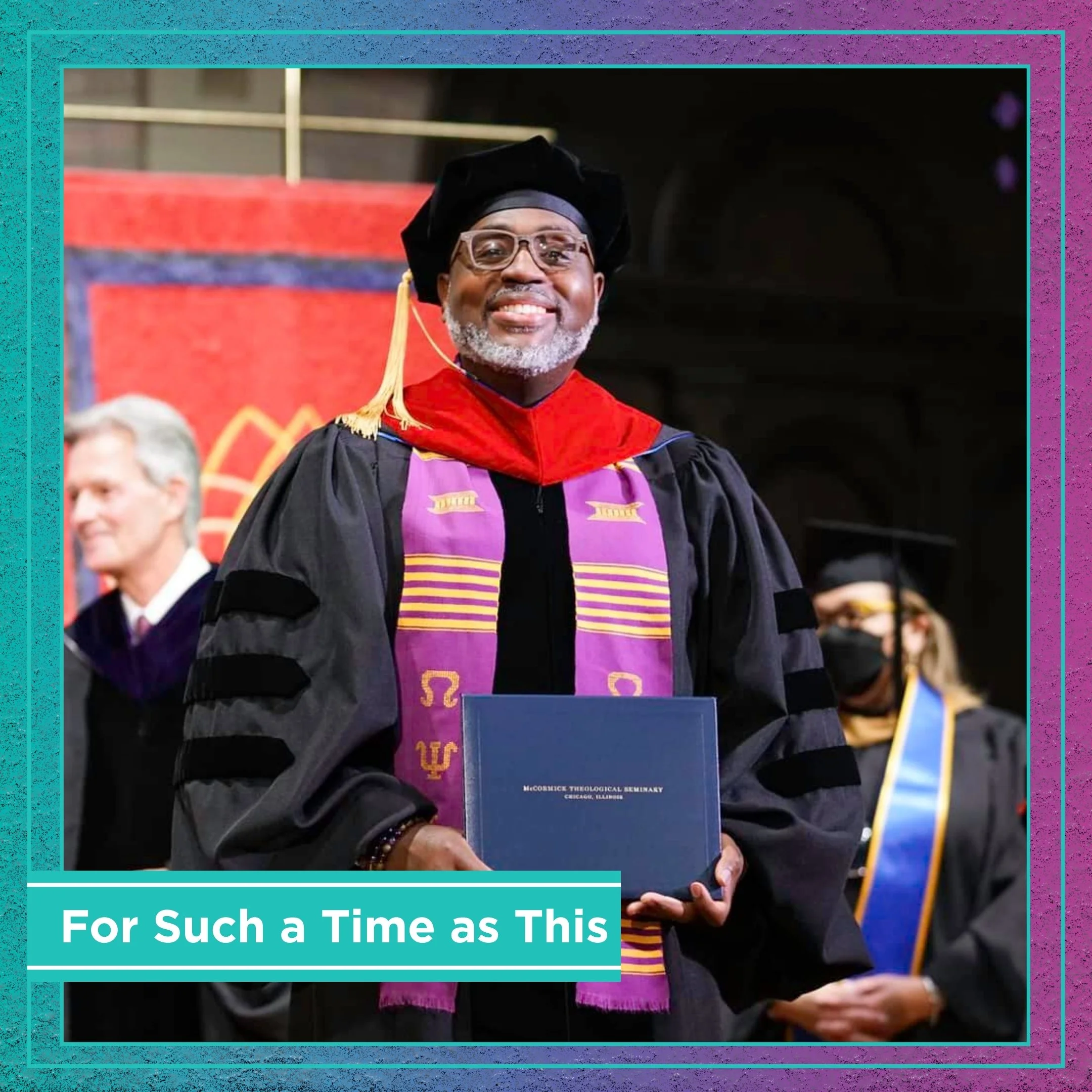
When Rev. Dr. Leverette Bryant, MDiv ’22, lifts his hands to name the joy found in Christ — or pauses in prayer at the end of a sermon — his roots show. Raised by grandparents who grounded him in a “rich and deep-rooted” faith, his call was shaped long before a pulpit or a seminary classroom. Their steady witness still informs how he preaches, leads, relates, and casts vision for the church he serves.
A HISTORIC CHURCH AT A NEIGHBORHOOD CROSSROADS
Today, Dr. Bryant pastors First Baptist Congregational Church of Chicago (FBCC), a landmark congregation on the Near West Side. Deeply rooted in the Black church tradition — and connected to McCormick’s own legacy as the “home” church of President Dr. Maisha Handy —FBCC ministers at the fault line between the West Loop and the United Center, where rapid gentrification and demographic shifts are reshaping daily life. Meeting that moment requires theological depth, cultural fluency, and adaptive leadership, capacities Dr. Bryant credits in large part to his Doctor of Ministry at McCormick.
FROM JUSTICE TO MINISTRY — A CHICAGO STORY
A lifelong Chicagoan, Bryant grew up on the West Side and was leading early as class president at John Marshall High School. Initially drawn to the law, he recognized that ministry offered the broader canvas for the justice-centered impact he sought. “The church was so deeply rooted in me,” he reflects, “that I wanted to extend what I experienced there to people who weren’t in the church.”
His call emerged at a time when pews were thinning, and Sundays competed with sports and brunch, making pastoral imagination not optional but essential.
LEADING WITH PRESENCE, PARTNERSHIP, AND JOY
Under Bryant’s leadership, FBCC has deepened its engagement with youth, neighbors, and community partners — strengthening school relationships, expanding its digital presence, and building collaborations from food distributions to program partnerships (including with the Chicago Bulls). Rather than retreating amid neighborhood change, FBCC has leaned into visibility and trust, sharing decades of community experience while remaining open to new forms of ministry.
That posture reflects Bryant’s own pastoral DNA. Known since childhood as “the nice kid,” he has been intentionally, contagiously kind — and it’s reshaping church culture.
“Sometimes the heavy-handedness puts people on guard,” he says with a smile. “Intentionally nice behavior has liberated them. It’s okay to smile, to relax, to wear gym shoes. People are enjoying their Christianity for the first time.” The result is a congregation marked by authenticity, accessibility, and joy.
WHY MCCORMICK
Bryant was drawn to McCormick by a new DMin cohort designed for active ministry leaders, shaped by the pastoral philosophies associated with Jeremiah Wright and Freddie Haynes. From the first conversation — affordable tuition for clergy and flexibility for families — he felt seen. “They respected who we are,” he says, “where we’re fulfilling family duties while managing ministry—and still learning and improving.”
The cohort itself became catalytic. Studying Scripture alongside community development, neighborhood mapping, and the realities of historic urban disinvestment clarified both the systems at work and the biblical mandate to confront them.
“McCormick prepares you for those yet to come into the light,” Bryant reflects. “I wasn’t there to relearn Sunday School; I was preparing a message for the generations coming behind us. As innovative as we get, the challenges persist—so we have to keep updating our understanding.”
PREACHING WHERE PRACTICE MEETS HOPE
Each Sunday, when Dr. Bryant steps into the pulpit at FBCC, he carries voices with him — from his grandparents’ living room to his colleagues and mentors at McCormick. Preaching becomes applied theology for a community navigating change with hope. And FBCC, in turn, embodies McCormick’s mission: forming leaders who are deeply rooted, contextually engaged, and ready to serve faithfully and creatively in a complex, changing world.
This is what it looks like to be formed for such a time as this.