Memory in Action: The Sacred Work of Remembering
JULY 23, 2025
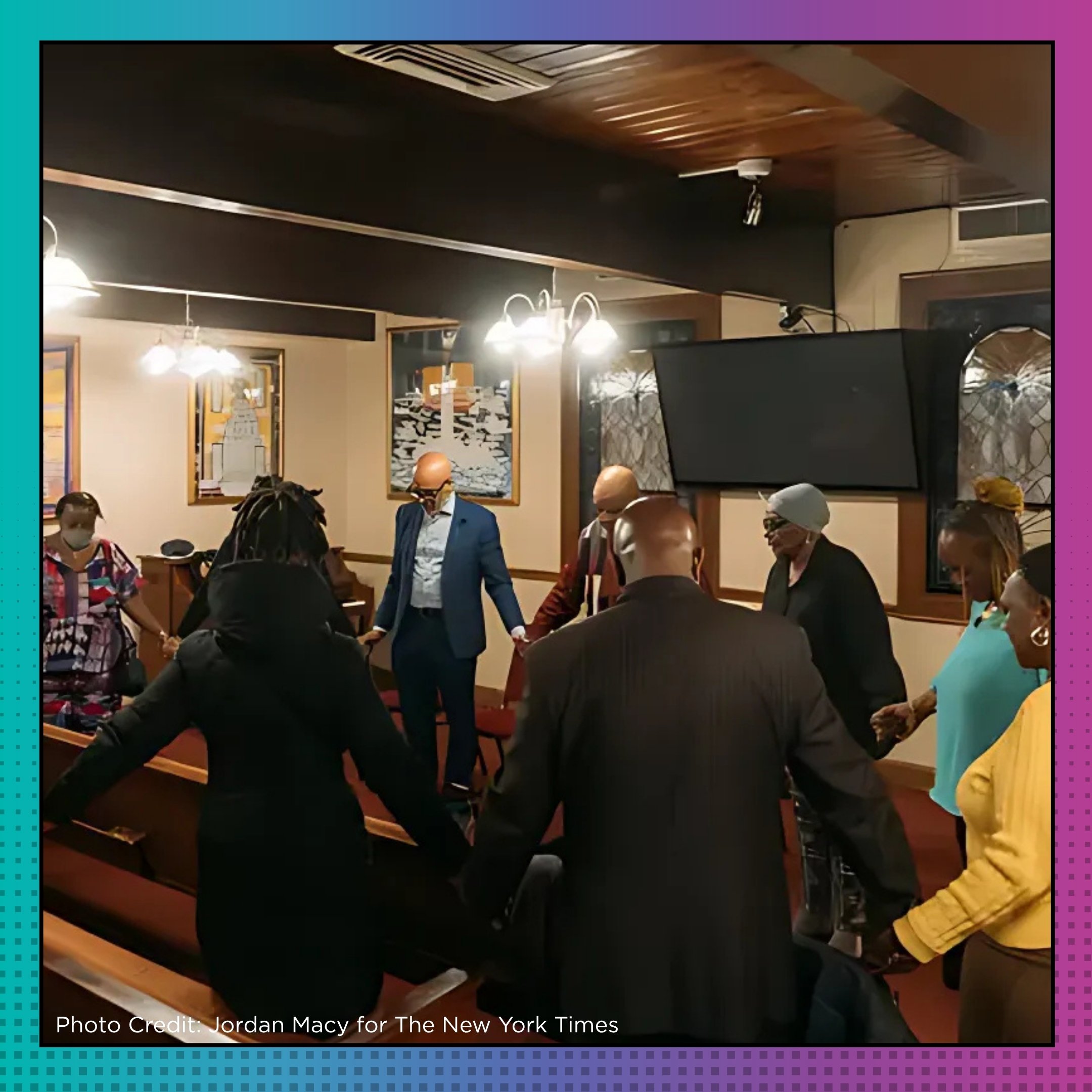
In a recent New York Times article, “To Preserve Their Community, a Brooklyn Church Looks to the Sky” (June 3, 2025), journalist Mihir Zaveri captures the heartbreak and the hope unfolding in East New York, Brooklyn. The story centers on Rev. David Brawley and St. Paul Community Baptist Church as they face a familiar crisis: the quiet exodus of longtime Black families, pushed out by rising rents and vanishing affordability.
“There’s a part of your soul that gets affected,” Rev. Brawley says in the article about watching lifelong church members forced to leave. But rather than let displacement define their future, St. Paul is responding with action rooted in memory—and a vision for justice.
The church is pioneering a model that turns sacred space into community infrastructure. Parking lots and underutilized land are being reimagined as sites for affordable housing—projects that ensure the people who built East New York can remain part of its future. It’s a bold response that doesn’t just ask, what can the church do?—but insists, what must the church do in the face of injustice?
This same spirit animates the Sacred Memory Project at McCormick Theological Seminary, which supports faith-rooted efforts to reclaim history, resist erasure, and create space for justice-informed transformation. That’s why McCormick is honored that three St. Paul members are participants in our upcoming Sacred Memory Project learning cohort.
“Their voices and lived experience are shaping a vital experiment in theological education, where remembering is not passive reflection but active resistance,” emphasizes Dr. Itihari Touré, Sacred Memory Program Founder and Director. “Sacred Memory is where community storytelling becomes the foundation for institutional change; where faith, memory, and justice converge.”
Through their housing work, St. Paul is showing what sacred memory looks like when it takes up physical space—brick by brick, home by home. And through the Sacred Memory Project, that same work is being reflected, studied, and strengthened within our classrooms and communities of practice.
At the heart of it all is a belief that memory isn’t just what we carry—it’s what we build.