

Formed for Justice
APRIL 7, 2026
A Historic First: Antonio King’s Ongoing Call to Serve
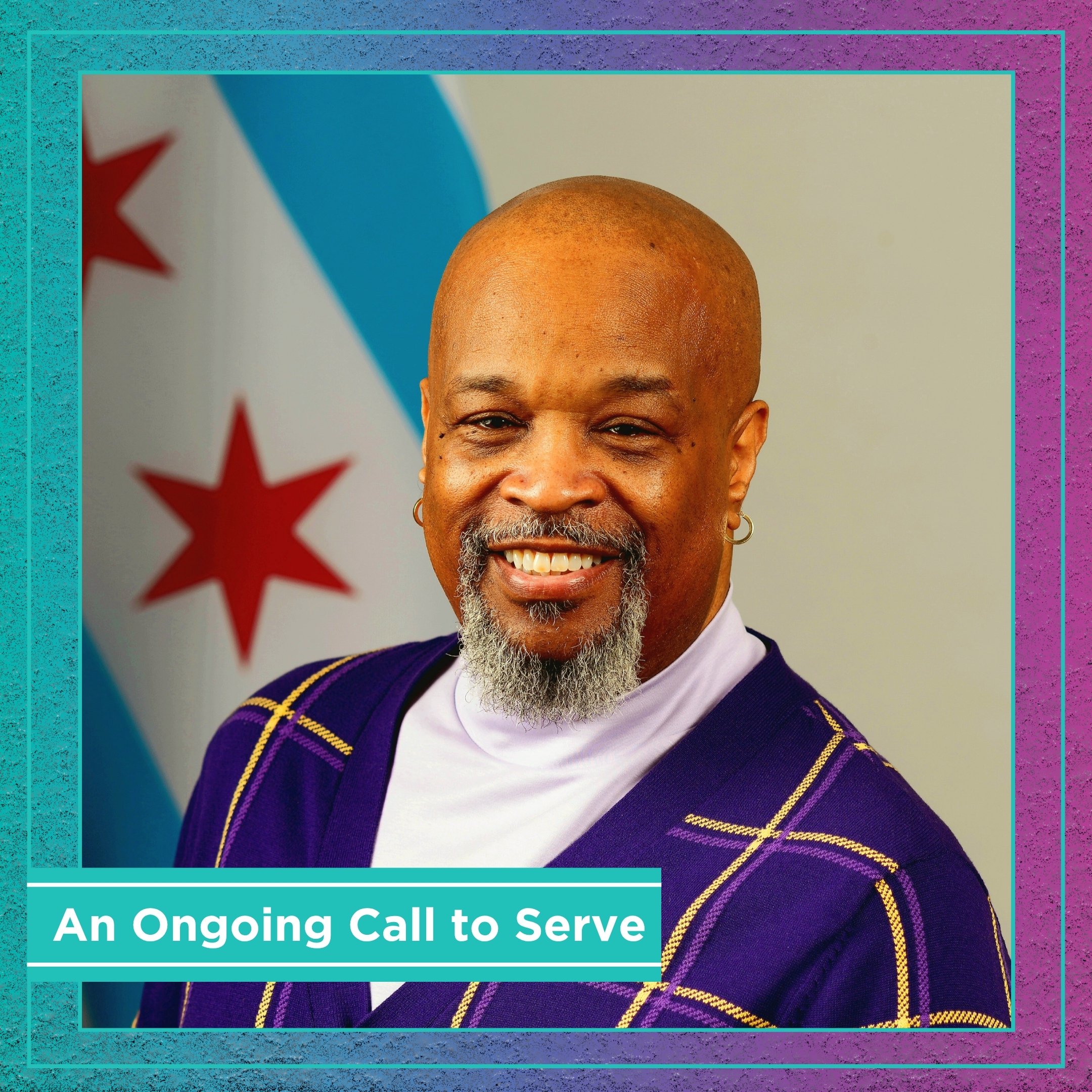
For generations, McCormick Theological Seminary has prepared leaders to engage the world as it is — and to help shape it toward greater justice, dignity, and belonging. That work does not happen in isolation. It is formed in conversation with the cities and communities our leaders are called to serve. In Chicago, that calling carries particular weight. Long recognized as a national leader in LGBTQ+ advocacy, the city has steadily expanded its commitments across administrations — from Mayor Richard M. Daley’s investment in institutions like the Center on Halsted and early policy leadership, to Mayor Rahm Emanuel’s inclusive appointments, to Mayor Lori Lightfoot’s equity-driven initiatives for LGBTQ+ youth and public safety, and now Mayor Brandon Johnson’s push to institutionalize LGBTQ+ equity at the highest levels of city government. It is within this legacy — and this ongoing work — that the formation of justice-minded leaders takes on renewed urgency and meaning.
When Antonio King, MAM ‘26, received the call from the mayor’s office confirming his appointment as Chicago’s first Director of LGBTQ+ Affairs, he did not experience it as a singular achievement. Instead, he understood it as affirmation — recognition of a lifelong commitment to justice, advocacy, and care for communities too often pushed to the margins.
King’s work has long been rooted in accompaniment. Now, as he settles into the early months of this historic role, he reflects not only on what lies ahead but on the path that has shaped him.
FORMATION THROUGH LOSS AND ACTION
His journey into advocacy began in the late 1980s while working at Illinois Bell (now AT&T), when the AIDS crisis became deeply personal. The loss of someone close to him compelled King to seek understanding of the epidemic, of the systems failing those most vulnerable, and of his own identity as a Black gay man navigating a world of silence and stigma.
That search led him into grassroots organizing. From Chicago’s South Side to Memphis, Tennessee, King engaged communities directly, sharing knowledge, building trust, and responding to urgent need. In Memphis, what began as informal outreach in bars and clubs revealed a striking absence of coordinated support.
King’s efforts helped initiate a framework for engagement at a time when few structures existed. It was early evidence of a pattern that would define his work: stepping into gaps and helping to build what was missing.
BUILDING SYSTEMS OF CARE
Returning to Chicago, King continued this work across nonprofit, public health, and civic spaces. As a liaison to the LGBTQ+ community within the city’s healthcare system, he cultivated relationships that would span multiple administrations — from Daley to Lightfoot — contributing to a more responsive and inclusive approach to care and outreach.
Yet King’s sense of call extends beyond public service. After relocating to Hyde Park, he encountered a new dimension of belonging at Trinity United Church of Christ. There, he heard a message that affirmed the fullness of his identity — an experience he describes as “fortifying my authentic self even more.”
In that moment, King recognized that his faith and his identity were not in tension, but in conversation.
This realization opened the door to ministry. With humility and intention, King began cultivating space within the church for LGBTQ+ individuals seeking community and affirmation. What began as a small, focused ministry has grown into a more expansive and inclusive gathering — one that reflects the evolving realities and needs of those it serves.
FORMATION AT MCCORMICK
It was through this deepening sense of vocation that King found his way to McCormick Theological Seminary. Encouraged by trusted mentors and faith leaders, Rev. Stacey Dunn and Rev. Otis Moss, he came seeking not only knowledge, but formation.
At McCormick, King has embraced the opportunity to engage scripture, theology, and community in ways that both ground and challenge him. “I needed to be able to speak for myself and defend what I know to be true from scripture,” King reflects. “To understand scripture in a way that allows me to respond faithfully and thoughtfully.”
His time at McCormick has been integral to that process — equipping him to hold together his commitments to ministry, justice, and public leadership.
LEADING IN THIS MOMENT
In his current role, King carries these commitments forward. While his appointment has drawn national attention, he approaches the work with steady focus. For him, this position is not a departure from his calling, but an extension of it.
He remains deeply engaged in his studies while assembling a policy plan for his role, preparing to complete his degree in the coming year.
Balancing these responsibilities requires discernment. King is candid about the challenges of time and capacity, yet remains grounded in his desire to show up fully — in the classroom, in the community, and in his work with the city.
Central to King’s leadership is an awareness of the diversity within the LGBTQ+ community itself, particularly how race, culture, and history shape experiences of belonging and exclusion.
As an African American man, he brings a perspective shaped by lived experience — one that informs his commitment to ensuring that advocacy reaches those who have too often been overlooked.
LOOKING AHEAD
Looking ahead, King’s goals are both practical and deeply relational: expanding access to resources, strengthening community partnerships, and embedding advocacy across the fabric of the city.
He is zeroing in on areas with an explicit need for improvement in this first year, including support for the city’s elderly LGBTQ+ population, creating safe spaces and key resources in schools, and establishing stronger workplace training standards. All, he is confident, will have a long-term impact on both the community he serves and the city as a whole.
For King, formation at McCormick remains essential to this work. It is a space where he is invited into deeper reflection, where his commitments to justice are nurtured, and where he is challenged to grow.
Antonio King’s journey is not defined by a single role or moment, but by a sustained commitment to justice, faith, and community. At McCormick, that journey is both honored and expanded — forming leaders who are prepared to meet the demands of the moment with courage, clarity, and care.