

(Be)coming What We Imagine
SEPT 9, 2026

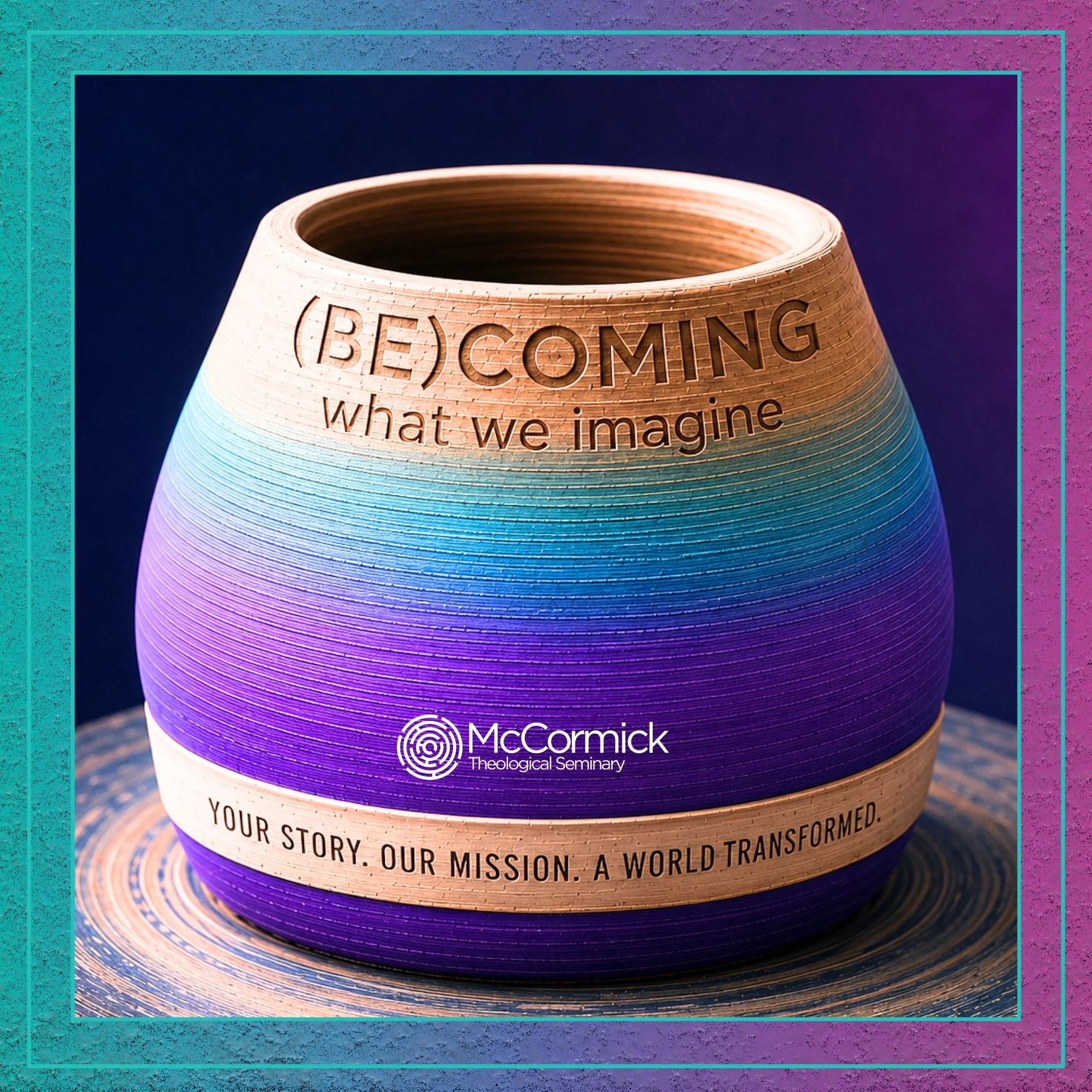
Introducing McCormick’s 2026-27 Theme
There comes a moment when possibility must become practice—when the future we have prayed for, dreamed about, and dared to imagine asks something more of us. It asks us to rise, to move, and to place our own hands in the work of bringing it forth.
Last year, we invited the McCormick community to awaken to possibility—to open our eyes, hearts, and holy imaginations to what God might be calling forth in us and through us. But awakening was never meant to be the destination. It was preparation.
Once our eyes have been opened, we are responsible for what we have seen. Once we can imagine a more just, compassionate, and life-giving world, we must decide whether we will watch and wait for it—or become active participants in its creation.
That is the call before us in this new academic year:
(Be)coming What We Imagine
Your Story. Our Mission. A World Transformed.
FROM BEING TO BECOMING
We write (Be)coming this way intentionally, emphasizing BE, because transformation begins with who we are willing to be.
We must be courageous. Be present. Be accountable. Be curious. Be honest about what is broken and hopeful about what can be made whole. Be open to one another and attentive to a God who has never been confined to the places where we have been taught to look.
Then we must be willing to come—to come together, come forward, come alongside, and come into fuller expressions of who God created us to be.
Our ancestors understood this kind of becoming. They imagined freedom while living under the weight of bondage. They built schools, churches, businesses, movements, and communities in places that denied their full humanity. They cared for one another, made a way out of no way, and found the sacred in kitchens, classrooms, storefronts, sanctuaries, and streets. They did not wait for the world to become just before practicing justice. They embodied the future for which they prayed.
Their witness reminds us that imagination is not escapism. For people whose dignity, voices, and possibilities have too often been constrained, imagination is a spiritual discipline—a holy refusal to allow oppression, scarcity, fear, or somebody else’s limited vision to have the final word.
Yet imagination alone is not enough. We must give it hands and feet.
(Be)coming calls us to embody now the justice, compassion, courage, joy, and beloved community we hope to see in the world.
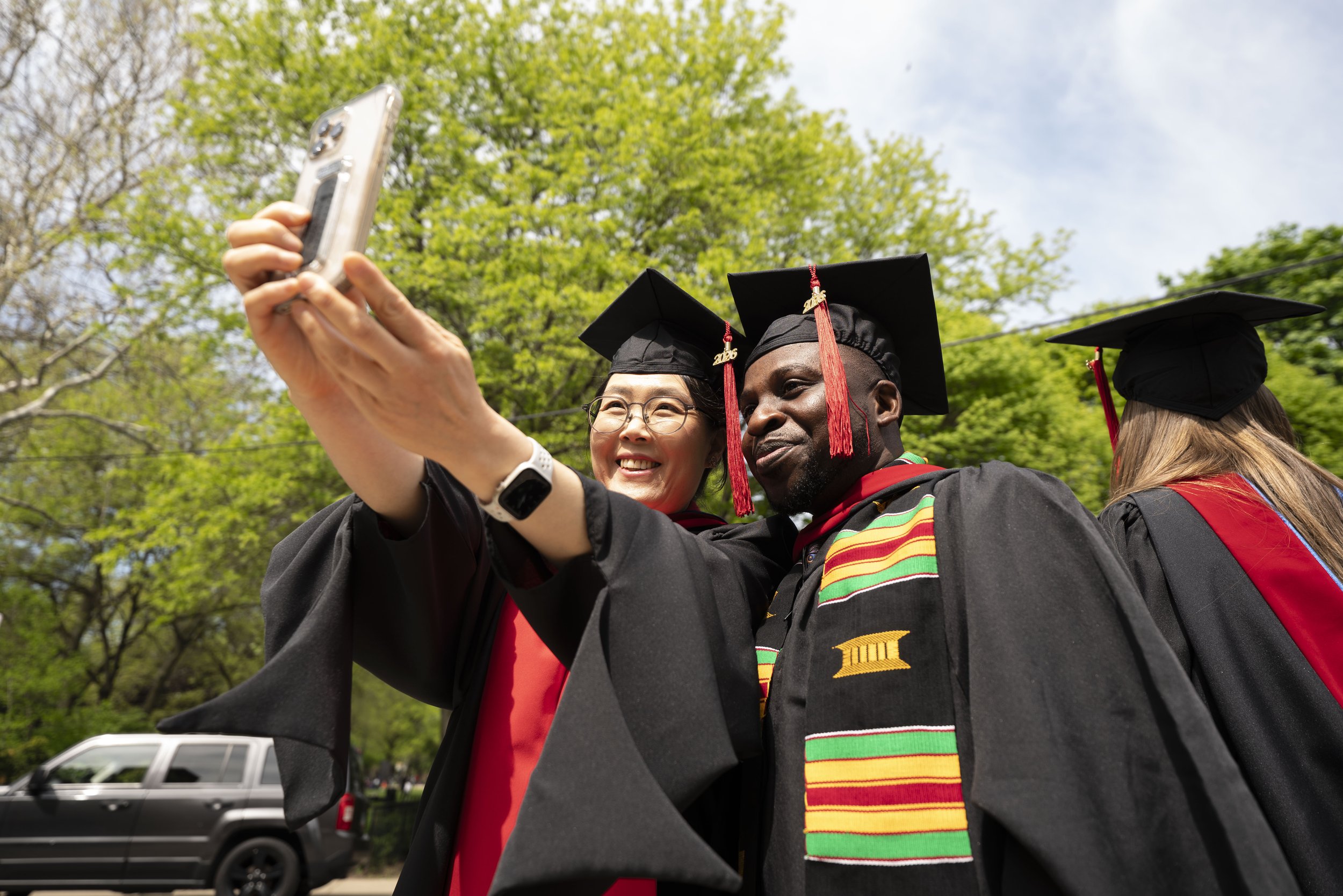
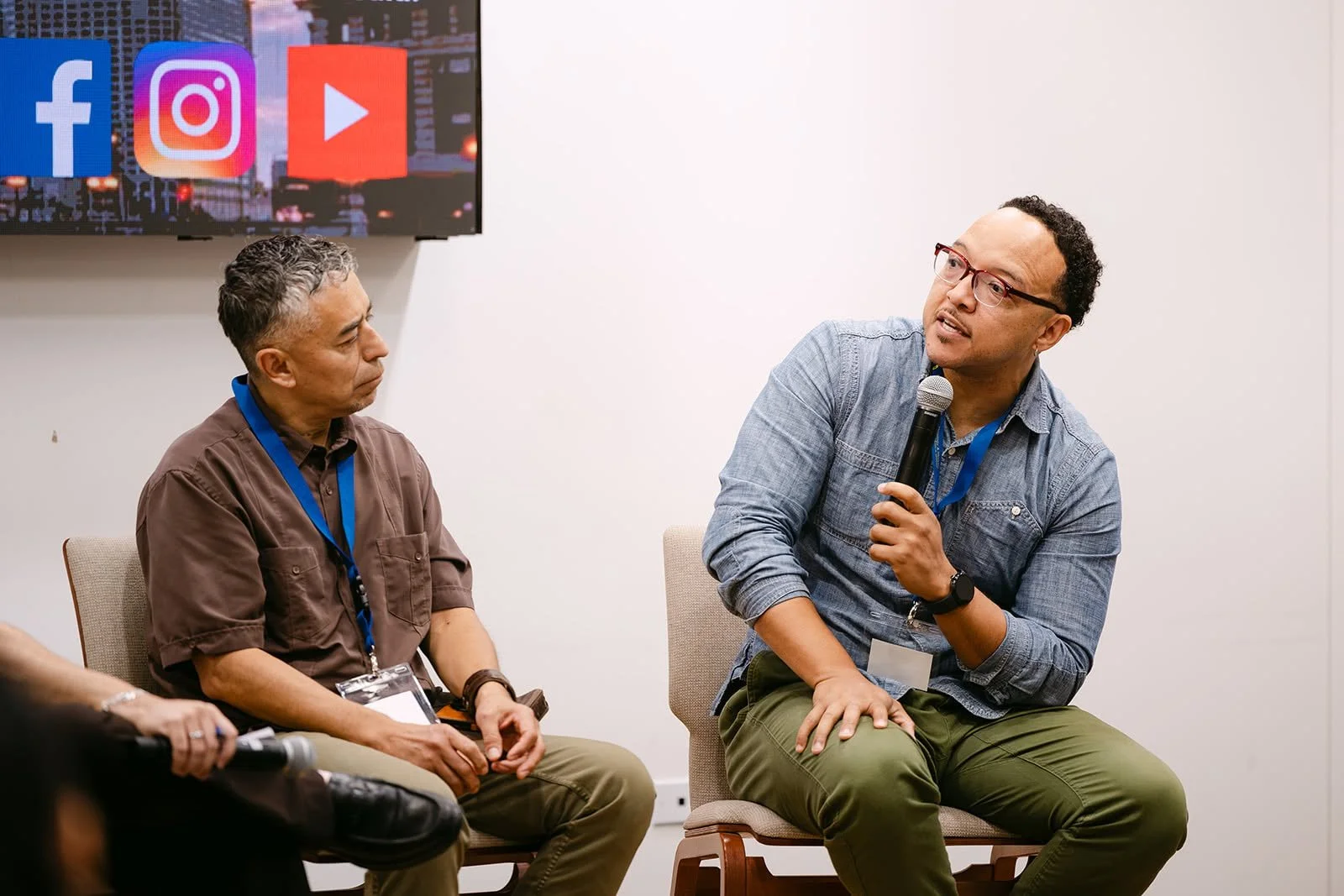
YOUR STORY MATTERS
At McCormick, this calling extends far beyond preparation for the pulpit. We form pastors, yes—and also organizers, educators, chaplains, artists, nonprofit leaders, advocates, entrepreneurs, public servants, scholars, caregivers, and faithful people still discerning where their gifts may lead.
We believe theology belongs wherever people wrestle with the questions that shape human life: Who are we? How shall we live together? What does love require of us? What does justice demand? Where is God present amid suffering? What becomes possible when we refuse to accept the world as it has been handed to us?
Your vocation may take you into a congregation, classroom, hospital room, community organization, boardroom, creative space, or the public square. Wherever you are called, your story, gifts, lived experience, and willingness to participate matter.
Your story is not incidental to our mission. It is one of the places where our mission takes flesh.
That conviction shapes our commitment to being a student-centered institution. We do not ask students to leave their histories, cultures, communities, or questions at the door. We welcome the whole person. Education is more than the transfer of information; it is formation that honors what people know in their minds, carry in their bodies, and have learned through living.
Our work is not to manufacture identical leaders. It is to nurture the callings and possibilities already stirring within each person—to help students become more fully, faithfully, and courageously themselves.
THEOLOGY BELONGS TO THE PEOPLE
Our commitment to accessible theology grows from this same conviction. Theological education cannot belong only to those who can enter a traditional classroom, speak a particular language, afford a particular pathway, or fit within a narrow definition of ministry.
Theology belongs to the people. It must address the realities communities face every day and be accessible across cultures, languages, geographies, economic circumstances, and vocational callings.
If theology cannot travel beyond our walls, sit at the kitchen table, enter the neighborhood, speak to our wounds, and help communities imagine their way toward freedom and flourishing, then it is not yet doing all that theology is called to do.
SUSTAINING THE WORK TOGETHER
Becoming what we imagine also requires us to sustain the house in which this work happens. Fiscal viability and growth are not separate from mission; they make mission possible. Responsible stewardship allows us to invest in students, expand access, nurture innovation, support our people, and ensure that justice-minded theological education flourishes at McCormick for generations.
Stewardship asks not only what we can preserve, but what we are prepared to build. It calls us to cultivate the resources, relationships, and institutional strength needed to serve the students here now—and those whose names we do not yet know. We also know this work cannot be accomplished alone.
The tradition from which I come has taught me that survival and transformation have always been communal. We have made it because somebody shared what they had, told the truth, opened a door, made room at the table, prayed us through, or reminded us who we were when the world tried to convince us otherwise.
Institutional and community-wide collaboration grows from that wisdom. It calls us beyond our silos and into the sacred work of relationship—to listen across differences, share power, build partnerships, and recognize that no person, program, or institution possesses everything this moment requires.
Our stories do not disappear when they become part of a larger story. They gain strength, resonance, and possibility.
That spirit must also shape how we care for those who carry McCormick’s mission each day. Investing in our employees is more than an operational priority; it is a reflection of our values. Our faculty and staff are whole people who bring intellect, creativity, experience, sacrifice, care, and calling to this community.
If we are serious about transformation, the people doing the work must have opportunities to grow, flourish, rest, lead, and imagine. An institution committed to justice in the world must practice dignity, equity, and care within its own walls.
These five commitments—centering students, expanding access to theology, building fiscal strength, deepening collaboration, and investing in our employees—are more than pillars of a strategic plan. They are practices of (be)coming. They are how imagination acquires form, values become visible, and prayer becomes movement.
A HOPE THAT WORKS
Movement is urgently needed.
We are living in a time when injustice is routinely normalized, division is deliberately cultivated, and exhaustion can make hope feel like one more demand. But the hope I know is not shallow optimism. It does not ask us to pretend all is well.
Our hope tells the truth about what is—and still insists that something else is possible.
It is the hope of people who planted trees whose shade they knew they might never sit beneath. The hope of women who stretched a little into enough while carrying visions larger than the circumstances surrounding them. The hope of people who understood that resistance and joy, struggle and beauty, lament and laughter can live in the same body.
That is a hope with some muscle on it. It does not merely wait. It works.
So, this year, I invite each of us to ask:
Who must I be for the future I imagine?
What must I release, reclaim, learn, or risk?
Whose wisdom have I overlooked, and whose voice must be invited into the room?
How might my story join with the stories of others in service of something greater?
What can we become together that none of us could become alone?
McCormick’s mission is not simply to prepare people to navigate the world as it is. We are here to form people who will participate in transforming it—people grounded enough to lead with integrity, courageous enough to confront injustice, compassionate enough to center those pushed to the margins, imaginative enough to see beyond inherited limitations, and faithful enough to begin building what they cannot yet fully see.
Bring your story. Bring your questions. Bring your gifts, hopes, holy discontent, and even your uncertainty. Come ready to learn. Come ready to lead. Come ready to collaborate. Come ready to be changed by the community you help to change.
Come ready to BE.
Together, let us become what we imagine—and, by the grace of God, help bring forth a world transformed.