Kindred Abundance: The Wealth of Communal Imaginaries
OCTOBER 21, 2026
Relfections from the ReStorying Institute: Weaving New Worlds
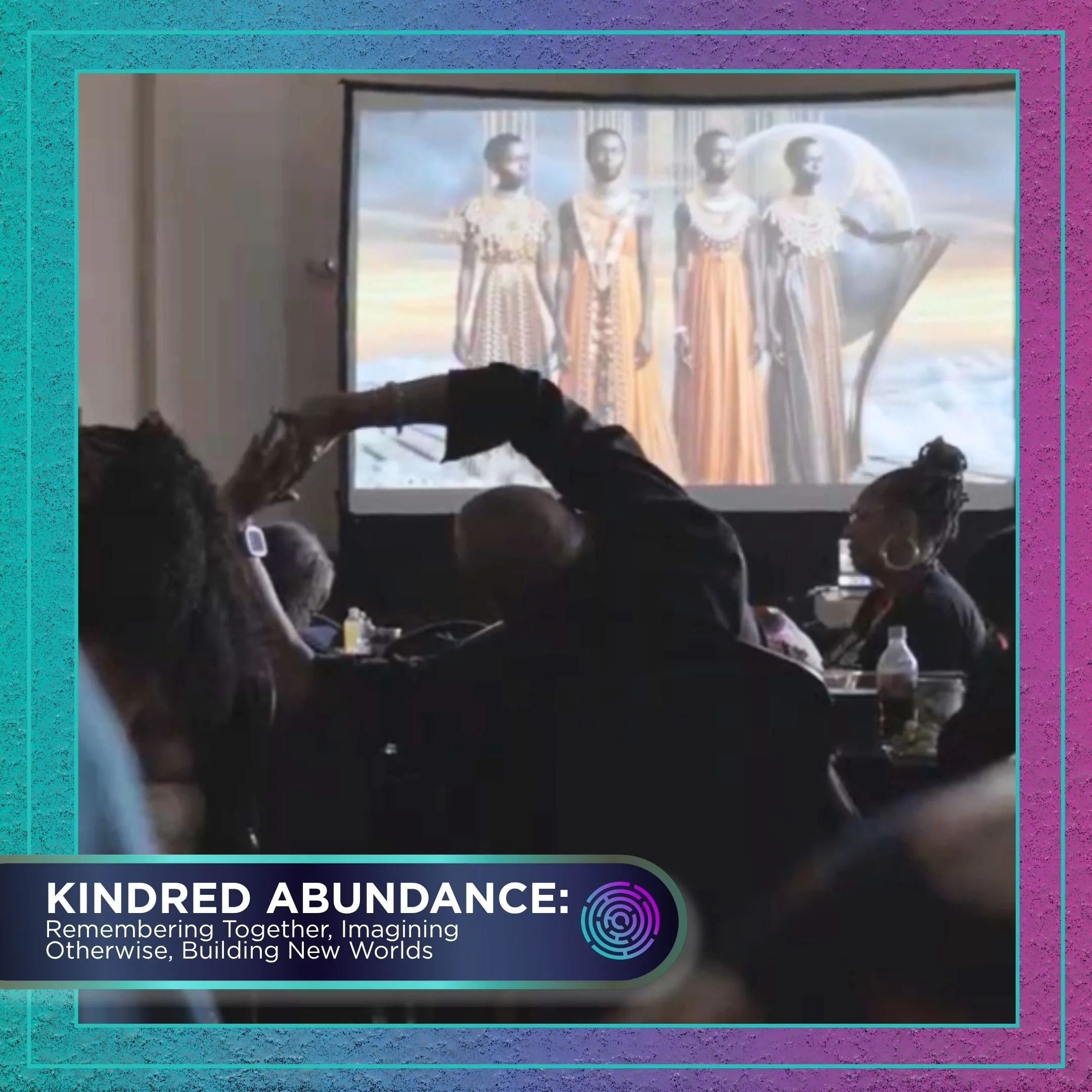
What does a community hold in reserve when its wealth cannot be fully counted in dollars, property, or institutional assets? Within Kindred Abundance, one answer is imagination—not the isolated inspiration of an individual, but the shared capacity of a people to remember, dream, and give form to possibilities that dominant systems have taught them to dismiss. Communal imaginaries are the stories, ancestral memories, rituals, relationships, and visions through which communities understand who they are and what their lives together might become. They are a living reservoir of meaning and possibility, replenished whenever people gather to remember, speak, create, and care.
MORE THAN A DREAM OF SOMETHING BETTER
To speak of communal imaginaries is to recognize that communities carry more than unmet needs. They carry knowledge of how to survive, practices of belonging, memories of resistance, and visions of flourishing. An elder’s story, a song that sustains people through grief, a chosen family’s commitment to care, or a young person’s drawing of a different neighborhood can help a community recognize resources that a conventional inventory might overlook. Within the framework presented in the supplied script, ancestral memory, chosen family, land, spiritual discernment, curiosity, and words all belong among the resources from which new futures can be fashioned.
These resources matter because what we can imagine together shapes what we are willing to build together. If the only available story is that there will never be enough, then exclusion can begin to appear inevitable. Communal imagination opens another possibility: we can organize our lives around belonging rather than competition, mutual responsibility rather than abandonment, and care rather than disposability. Kindred Abundance invites us to treat this capacity not as decoration around the ‘real work,’ but as a resource for doing the work differently.
ANCESTRAL MEMORY AS A RESOURCE FOR BECOMING
In this understanding of wealth, memory is not simply a record of what has passed. It is something communities can draw upon as they discern what comes next. Gathering around photographs, meaningful objects, stories, and rituals creates space to ask: What wisdom have we inherited? What practices have sustained us? What possibilities remain unfinished? The supplied script places these acts of remembering alongside dreaming and blessing, describing them as ways of contributing to a shared reservoir of communal imagination.
A story circle, then, can become more than an occasion for recollection. It can become a place where a community discovers the knowledge it already holds. An altar can become more than a display of meaningful objects. It can gather memory, grief, responsibility, and hope into a shared space of reflection. When these practices inform decisions about care, education, resources, and leadership, ancestral memory becomes part of the work of designing a future.
SACRED HOSPITALITY MAKES ROOM FOR SHARED IMAGINATION
A communal imaginary cannot be genuinely communal if only certain people are permitted to shape it. The question is not simply, ‘What future do we envision?’ It is also, ‘Whose memories, needs, and dreams have room in that vision?’
Here, the wealth of communal imaginaries meets the grounding practice of sacred hospitality. Hospitality welcomes people as kin, not as projects or cases. It recognizes that their presence changes the table. Within Kindred Abundance, this welcome provides the ground for reciprocity: people belong before their contributions are counted, and everyone can be both giver and receiver over time.
Applied to imagination, that commitment asks us to make room for people to help define the future—not merely receive a future designed on their behalf. A young person is not only the intended beneficiary of an educational program, but a possible co-creator of knowledge. A person seeking care is not only a set of needs, but someone whose story can help shape a more responsive ecosystem of care. The script identifies classrooms, clinics, congregations, neighborhoods, and institutions as places where this reordering can take root.
FROM SHARED VISION TO LIVING PRACTICE
The wealth of communal imaginaries becomes active when remembering and dreaming begin to change how a community lives. The supplied script describes a movement from story circles and creative rituals to mapping relationships, identifying where reciprocity is blocked, and designing small experiments that reopen the flow of care. Imagination does not replace material resources; it helps communities discern how resources, relationships, and power might be organized differently.
A gathering might begin with questions such as:
What stories have taught us who belongs—and who does not?
What wisdom already lives among us that our institutions have failed to recognize?
What would care look like if no one were treated as disposable?
What small practice could make that vision tangible now?
These questions turn a shared vision into an invitation to act. A community might move from imagining belonging to changing who participates in decisions; from remembering traditions of mutual support to organizing a network of care; or from naming isolation to creating regular spaces of welcome. These are ways to translate the script’s emphasis on shared imagination, mutual aid, and community-centered decision-making into everyday practice.
THE WEALTH THAT MOVES BETWEEN US
The three dimensions of Kindred Abundance belong together. Communal imaginaries hold the memories and possibilities from which communities can draw. The economy of the unexpected makes room for gifts, relationships, and responses that could not have been fully planned. The currency of reciprocity keeps care, resources, and responsibility circulating rather than fixed in permanent divisions between those who give and those who receive. Sacred hospitality grounds this movement in the recognition that people are kin, not commodities.
The wealth of communal imaginaries is therefore more than a collection of hopeful ideas. It is a community’s capacity to recognize what it carries, envision what it could become, and begin practicing that future together. Its measure is not simply the beauty of the dream, but the dignity, belonging, and shared life the dream helps make possible. Within Kindred Abundance, imagining otherwise is inseparable from living otherwise: weaving a world in which no person, no story, and no community is treated as disposable.