

The Disease Is In Society
May 20, 2026
In Conversation with Alumna Dr. Rochelle Johnson on Black Women, Depression, and the Church
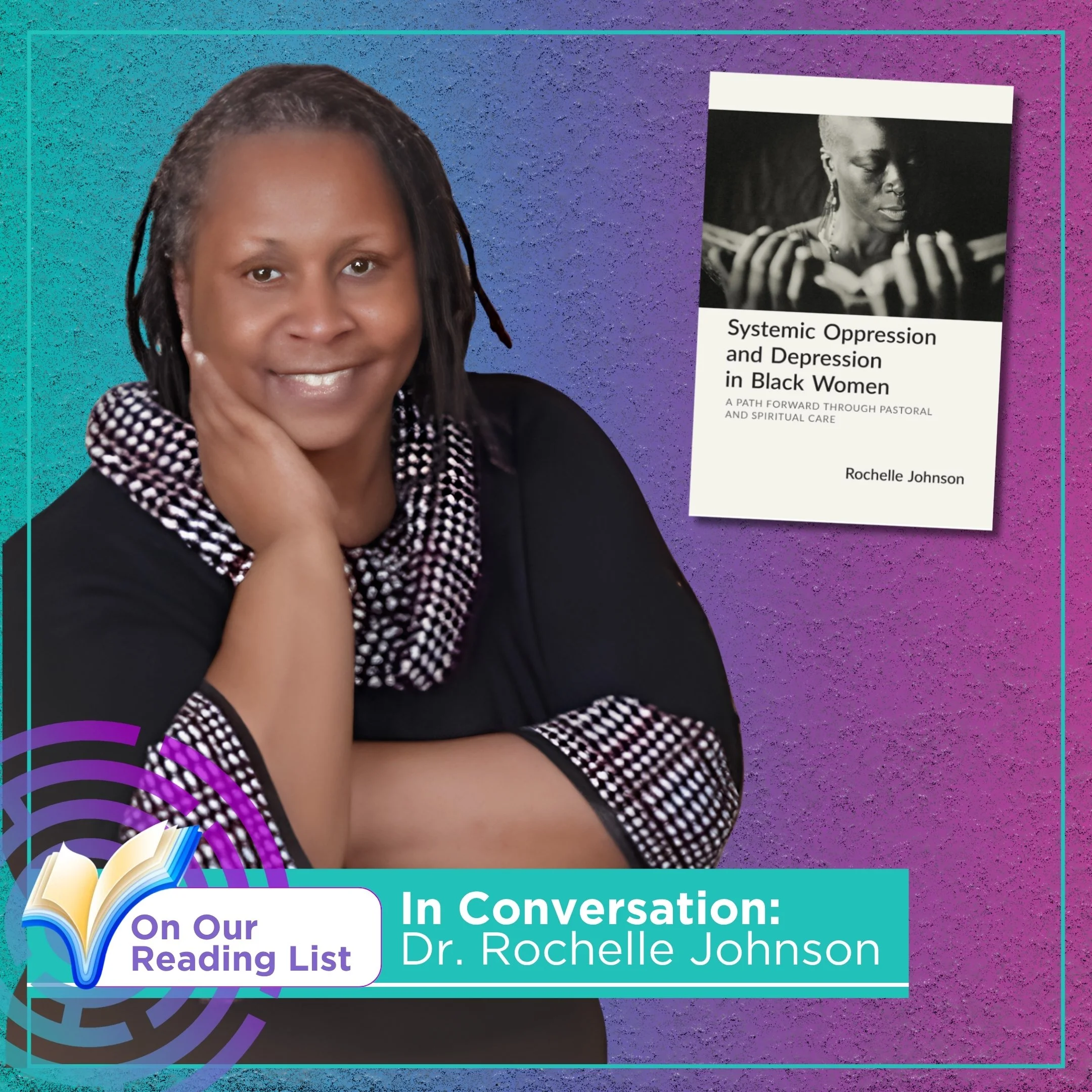
When McCormick Theological Seminary alumna Dr. Rochelle Johnson began writing Systemic Oppression and Depression in Black Women, she was not simply exploring mental health as an individual struggle. She was naming the ways trauma, racism, sexism, theology, and silence become embodied realities in the lives of Black women — and challenging both the church and theological education to respond differently.
A clinical social worker, ordained minister, and scholar shaped by womanist theology and psychoanalytic thought, Dr. Johnson’s work asks difficult but necessary questions about care, suffering, and liberation.
We recently spoke with Dr. Johnson about the roots of her work, the role of the church, and how her formation at McCormick helped shape the vision behind the book.
ON BRINGING WOMANIST THEOLOGY AND PSYCHOANALYSIS TOGETHER
Your book brings together Womanist theology and psychoanalytic theory in a really compelling way. How did your seminary training at McCormick help shape the way you hold these frameworks in conversation?
“My time at McCormick was crucial in helping me hold Womanist theology and psychoanalytic theory together.
First, McCormick trained me to treat the lived experience of Black women as a primary theological text. I learned to ask whose voice is centered and whose pain and wisdom are being taken seriously. That means any theory—psychoanalysis included—has to be accountable to real Black women’s stories.
McCormick also helped me see that theology, psychology, and justice work belong in the same room. I left with the conviction that mental health is not just an individual issue; it is deeply shaped by structures like racism, misogynoir, and economic inequality.”
ON THE HIDDEN WEIGHT BLACK WOMEN CARRY
As you listened to and worked alongside Black women through this work, what truths emerged that felt impossible to ignore?
“Depression was never only individual. It was bound up with adverse childhood experiences, generational and historical trauma, and ongoing oppression. The Strong Black Woman ideal both shielded and wounded. It offered dignity in the face of racism and sexism, yet demanded emotional invulnerability and unending service. Silence was protective—but costly. Silence came from stigma, real social risks, and a church culture that said ‘pray about it’ while rarely naming depression. They were surviving more than healing.”
Dr. Johnson also noted a recurring tension many women described between faith and mental health.
“Many believed real believers shouldn’t be depressed. When prayer didn’t ‘fix it,’ they blamed their faith and quietly questioned God’s nearness or favor.”
ON THE CHURCH AS BOTH REFUGE AND RISK
The role of the church is a critical thread in your work. Where have you seen faith communities contribute to harm — and where do you see potential for healing?
“Churches contribute to harm when they frame depression as sin, spiritual weakness, or lack of obedience… especially when the only response offered is ‘pray about it,’ with no attention to trauma, racism, sexism, or mental health care. In the Black church, this easily fuses with the Strong Black Woman myth: women are expected to be the backbone of the church and family, constantly serving and sacrificing, rarely resting, and almost never allowed to be visibly depressed.”
Yet Dr. Johnson believes faith communities also hold enormous potential for healing and repair.
“They can begin by explicitly naming depression as a real, embodied human experience rather than a spiritual failure, teaching that faith and therapy can coexist, and normalizing the use of professional, culturally competent mental health care.
Churches can become depression-affirming and trauma-informed communities… blessing rest and boundaries, sharing leadership and decision-making power with Black women, and treating advocacy against structural injustice as part of pastoral care.”
ON SEMINARY EDUCATION AND THE FUTURE OF MINISTRY
If this book is truly received as a challenge and a call, what do you hope theological institutions take away from it?
“This work exposes that the supposedly ‘neutral’ self in theology and pastoral care is actually white, male, and disembodied. Seminaries must de-center this subject and re-teach pastoral care, trauma theory, and theology through womanist and Black feminist lenses that show how racism, sexism, and classism intensify suffering.”
For Dr. Johnson, the future of theological education requires more than adding new electives or conversations around mental health. It demands a deeper transformation in how ministry itself is understood.
“Womanist theology should be foundational, not elective. Trauma and embodiment literacy must be embedded across the curriculum. Seminaries must train leaders in trauma-informed, culturally aware, womanist-informed listening that can hear both speech and silence.”
A THEOLOGY THAT REFUSES SILENCE
At its core, Systemic Oppression and Depression in Black Women is both scholarship and witness — an insistence that Black women’s suffering cannot be reduced to private weakness or hidden beneath spiritualized silence.
It is also a call to churches, seminaries, clinicians, and communities to tell the truth about trauma, oppression, embodiment, and care.
As Dr. Johnson writes throughout her work, healing begins when people are finally allowed to say what has too often gone unnamed.
McCormick is proud to celebrate the work of alumni like Dr. Rochelle Johnson, whose scholarship, ministry, and public witness continue to challenge the church toward deeper truth, justice, and care. Her work stands as a powerful reminder that theological education is not only about what we learn, but how we carry healing, courage, and transformation into the world.