
Kindred Abundance: The Economy of the Unexpected
AUGUST 19, 2026
Relfections from the ReStorying Institute: Weaving New Worlds
In a time marked by institutional fragility, burnout, and uncertainty, scarcity teaches us to compete, isolate, and tightly control what we can. It suggests that safety comes from holding resources close and treating disruption as a threat. At the ReStorying Institute: Weaving New Worlds, co-hosted by McCormick’s Sacred Memory Project, we offered another way: Kindred Abundance—the sacred surplus that emerges when our lives are bound together through mutual care. This is the second component to the framework for Kindred Abundance that emerges from the ongoing Sacred Memory work guided by Dr. Itihari Toure.
Drawing inspiration from adrienne maree brownʼs Emergent Strategy, the Economy of the Unexpected invites communities to see the not-yet-known not as a problem to solve, but as a place of possibility. Rather than defining wealth by extraction, profit, or possession, it recognizes shared imagination, ancestral memory, reciprocal relationships, and collective resourcefulness as forms of abundance.
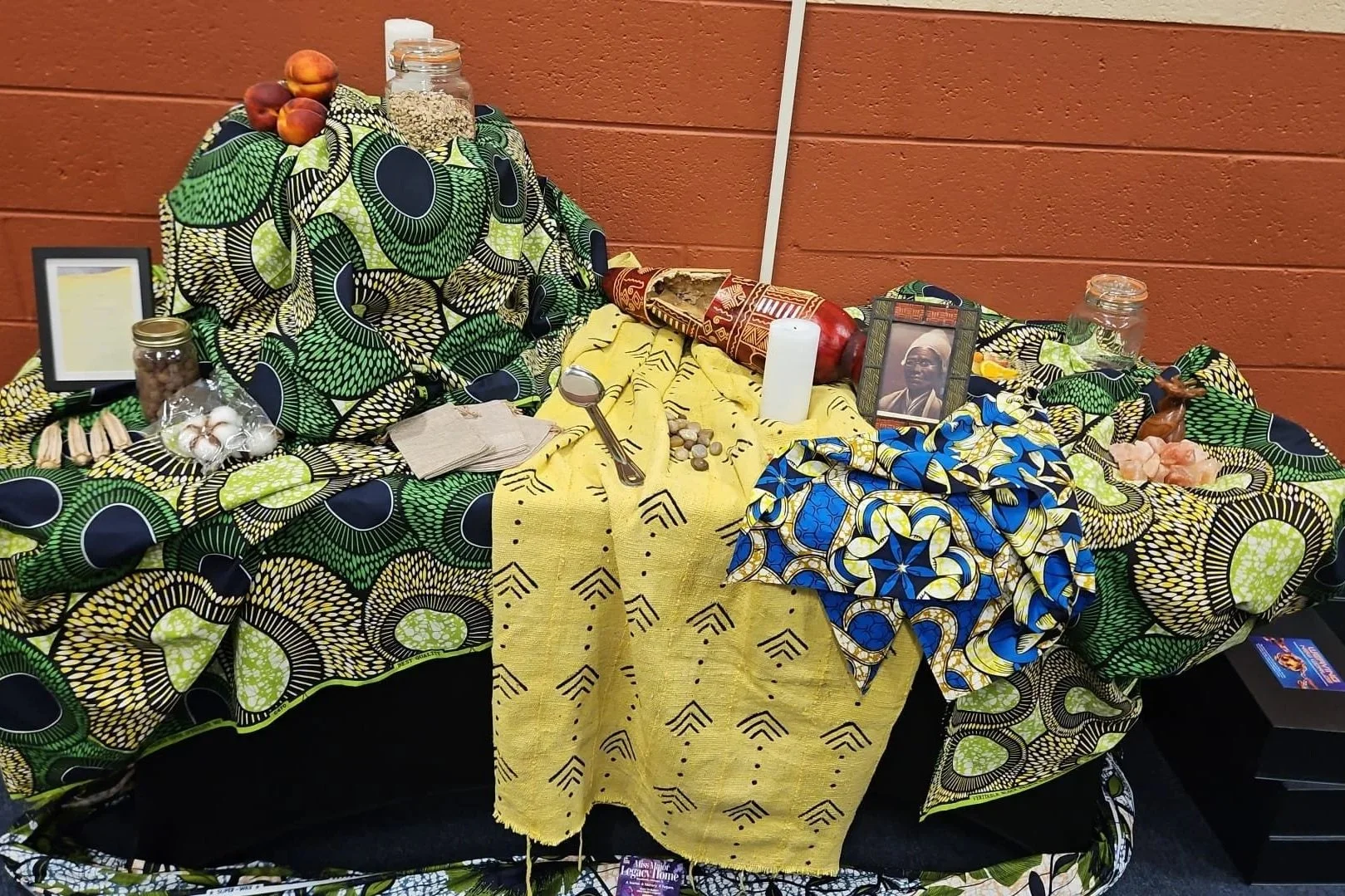
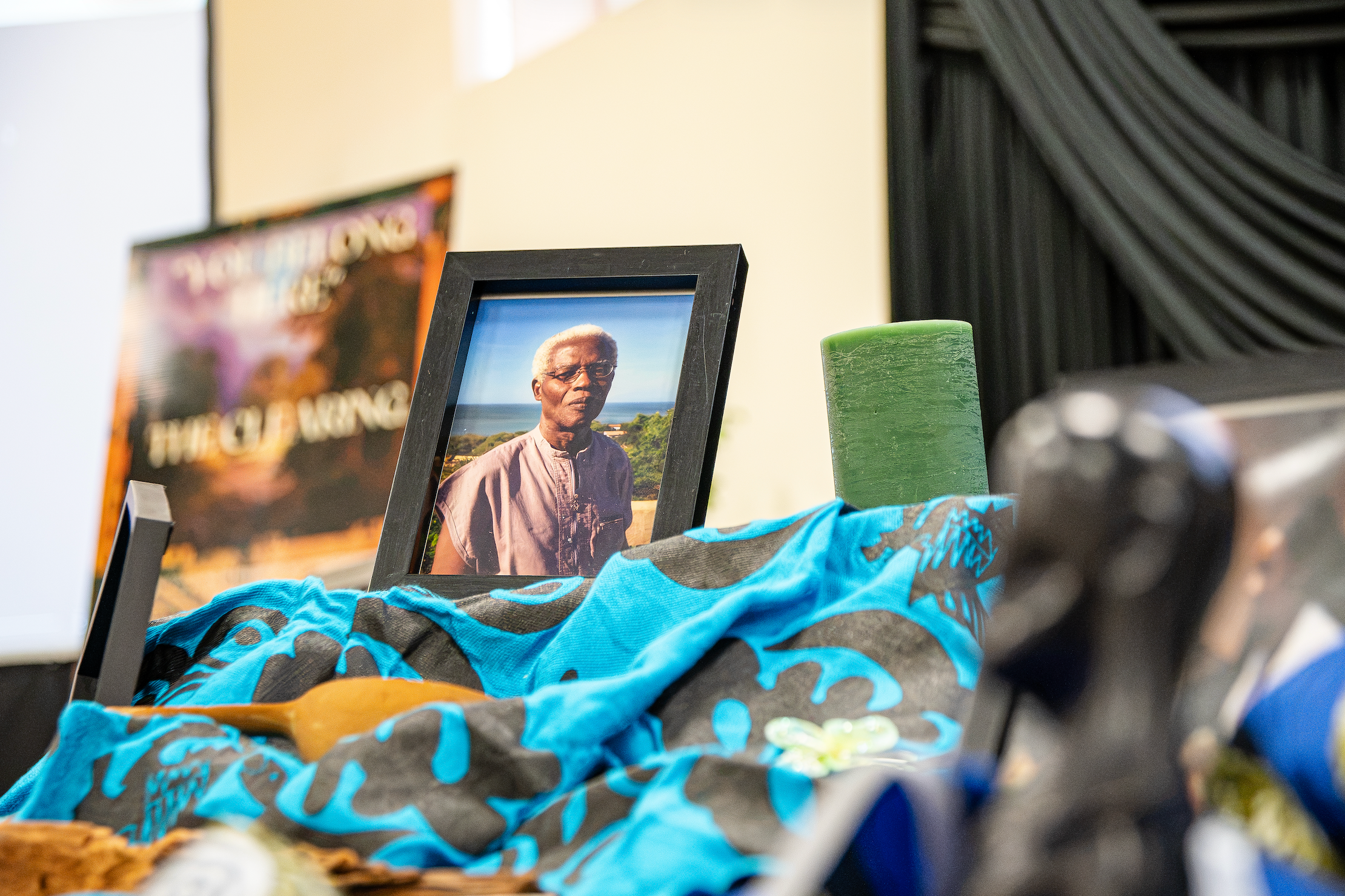
At the heart of this practice is the Altar of the Unexpected. Alongside the Altar of Sacred Memory and the Altar of the Table, it grounds Kindred Abundance in a commitment to emergence. It calls us to pay attention to what surfaces beyond our plans—to listen for new needs, unexpected gifts, and possibilities that become visible only when we make room for them.
This does not mean abandoning intention or preparation. Instead, it means loosening our attachment to rigid blueprints and becoming more responsive to the realities before us.
Communities can practice this by asking: What is emerging here? What wisdom is already present? What small act of care, repair, or connection might open a new path?
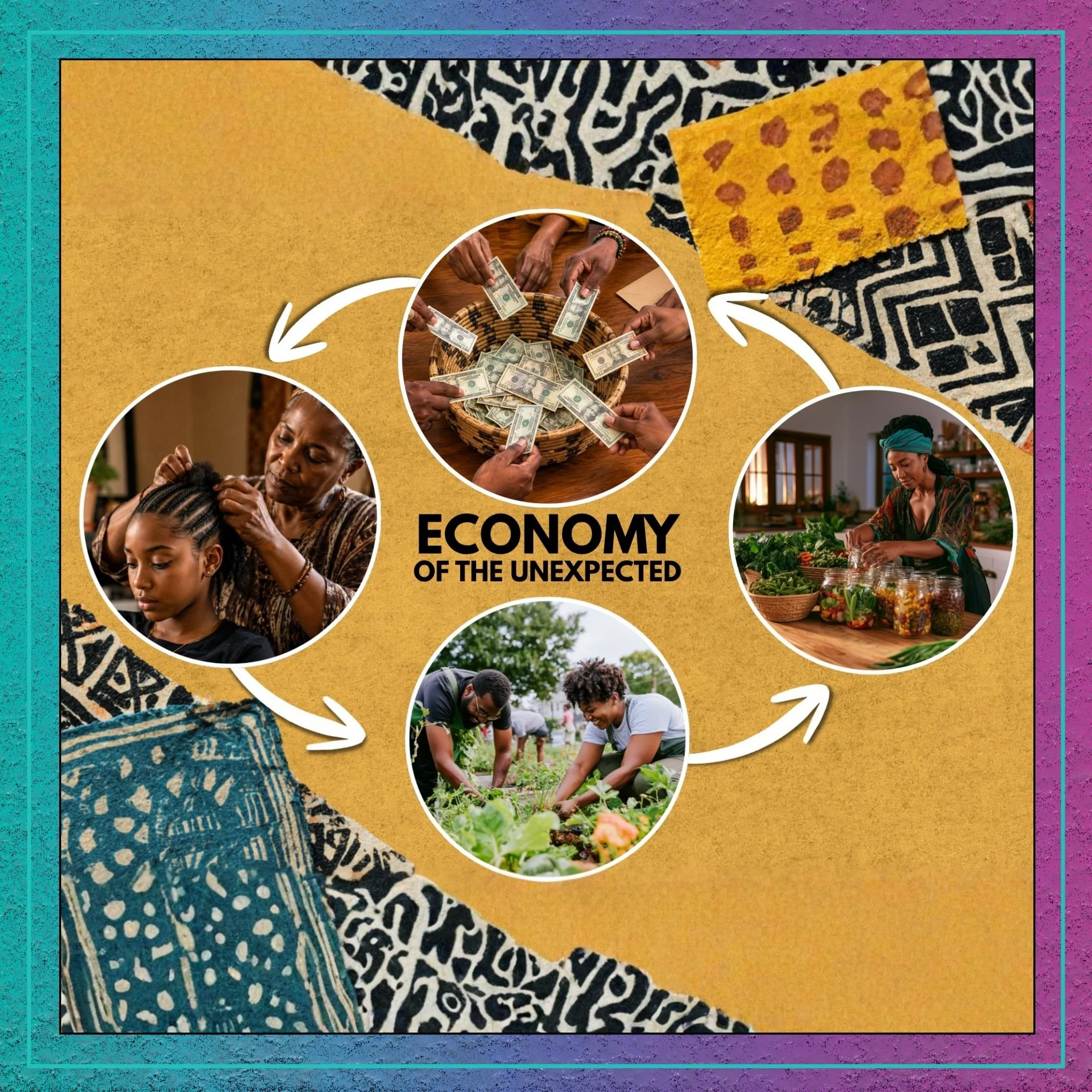
The Economy of the Unexpected is rooted in the belief that transformation often begins at a human scale. A shared meal, a peer-support circle, a neighborhood gathering, a repaired relationship, or an altar created in a classroom or clinic can become a living experiment in collective care. These small practices matter because, as emergent strategy teaches, how we do anything is how we do everything. The quality of our everyday relationships shapes the larger worlds we are building.
This approach also redefines what success looks like. Instead of measuring only financial return, productivity, or growth, we can look for signs of vibrancy: reduced isolation, restored dignity, deeper trust, shared skills, accessible space, and resources circulating where they are needed most. When care moves freely through a community, it creates more than momentary relief. It builds the relationships and resilience needed to meet future challenges together.
The Economy of the Unexpected moves at the speed of trust. Trust cannot be rushed, purchased, or forced into a strategic timeline. It grows through listening, mutual responsibility, vulnerability, and the willingness to remain connected when circumstances change. Like individual strands bound into a stronger cord, communities become more resilient when members can rely on one another.
Kindred Abundance reminds us that another world is not only something to imagine in the distance. It is something we practice in the present—through memory, reciprocity, experimentation, and care. By welcoming the unexpected, we can transform uncertainty from a source of fear into an opening for collective flourishing.